

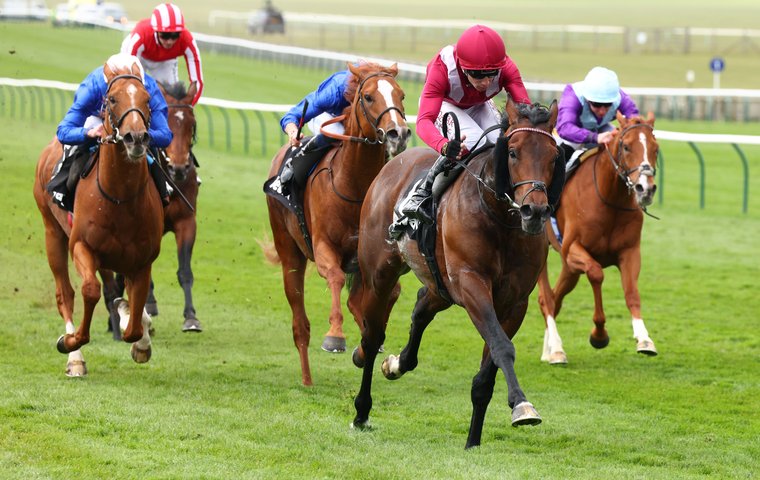
Adam Mills looks back at action on the Heath.

This week has really felt like the new Flat season is now underway in Great Britain.
The Craven Meeting on the Rowley Mile at Newmarket is the traditional starting point on the road to the first Classics of the season and beyond.
With that in mind, I’ve selected some of the highlights from the data this week with several horses to add to the Flat season tracker as a result.
The opening day of the meeting seemed to revolve around Charlie Appleby and the Godolphin team.
I could’ve given some further column inches to Talk of New York, who won the three-year-old conditions stakes with relative ease and who’s now as short as 5/1 for the 2,000 Guineas next month.
Personally, I think that price is now a little on the short side, but he’s going the right way and he was the horse to follow in our review of the Middle East season.
Alex Scott Maiden Stakes
Instead, I’ve chosen to write about Cerro Blanco, winner of the 7f maiden for three-year-olds at the start of the card.
Having been heavily supported into 4/9 favouritism at the off, it was no surprise to see this son of Wootton Bassett win by a length and a half in relatively comfortable fashion.
However, having raced towards the rear of the field in the early stages and having had to wait for the gaps to appear at a crucial stage, I certainly think that he was better value for this victory than the winning margin might suggest.
At an average of 7.48m, he had the longest stride length figure in the field and was significantly above the expected average for a winner of this race.
That’s not entirely surprising, especially given the way he lengthened in the closing stages when meeting the rising ground, but I particularly liked the late speed that he found to go and win the race in the final quarter of a mile.
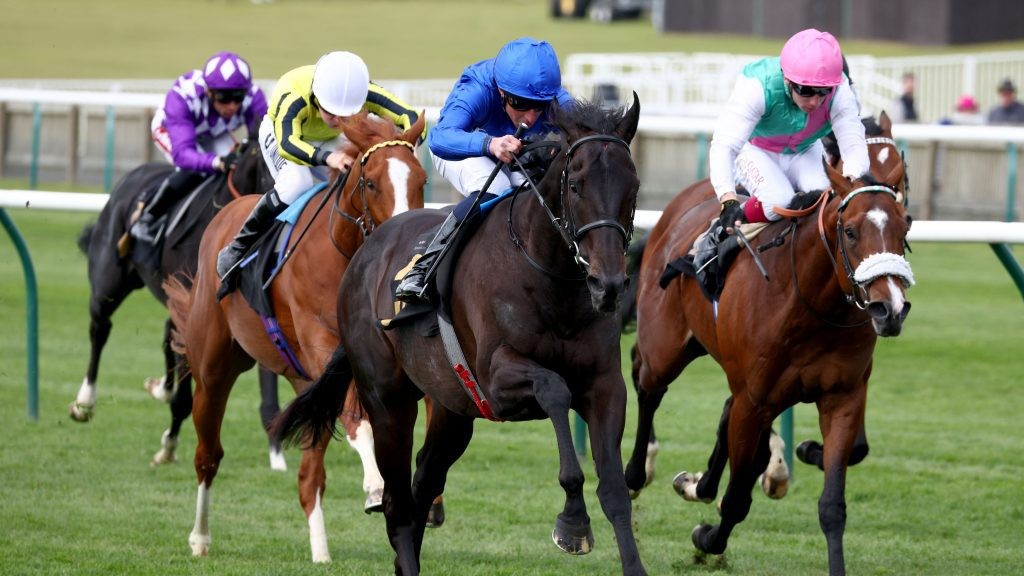
Cerro Blanco finished his race with furlong splits of 11.93 and 12.61s, both of which were the fastest splits in the field, and that made him the only horse in the field to record a finishing speed above 100 per cent (next best Powder Monkey recorded 99.31 per cent).
An overall winning time of 1:26.85 was slightly below par for this race and it would be true to point out that the last four winners of this race when it was run on ground described as ‘good’ were 2s quicker than Cerro Blanco.
However, if anything, I think that can be used as a source of encouragement for his connections, given the position he found himself at the halfway stage.
His late speed figure of 36.57 mph was three per cent quicker than any of his seven rivals and I’ve no doubt that he was the best horse in the field.
In his post-race interview with Racing TV, Charlie Appleby described him as a “challenge to the lads in the gates at home” and said he “hadn’t come off the bridle before”, which explained the reason for keeping him covered up in the early stages.
With that in mind, I think there was a lot of promise shown, and whilst Charlie Appleby also raised some concerns over his mentality and that he was more likely to head to another novice race with a penalty rather than anything loftier, the fact he added that he felt he had the engine for Group 1 races in time can only be seen as a positive.
Earl of Sefton Stakes
It’s quite hard to imagine a more striking performance than the return of Damysus in the Early of Sefton Stakes on Wednesday afternoon. He destroyed the field in the closing stages to win by over three lengths under James Doyle.
Having made the decision to take him on with last year’s winner Persica, I was fairly happy at the halfway point, with Richard Hannon’s horse sitting on the tail of the early leader.
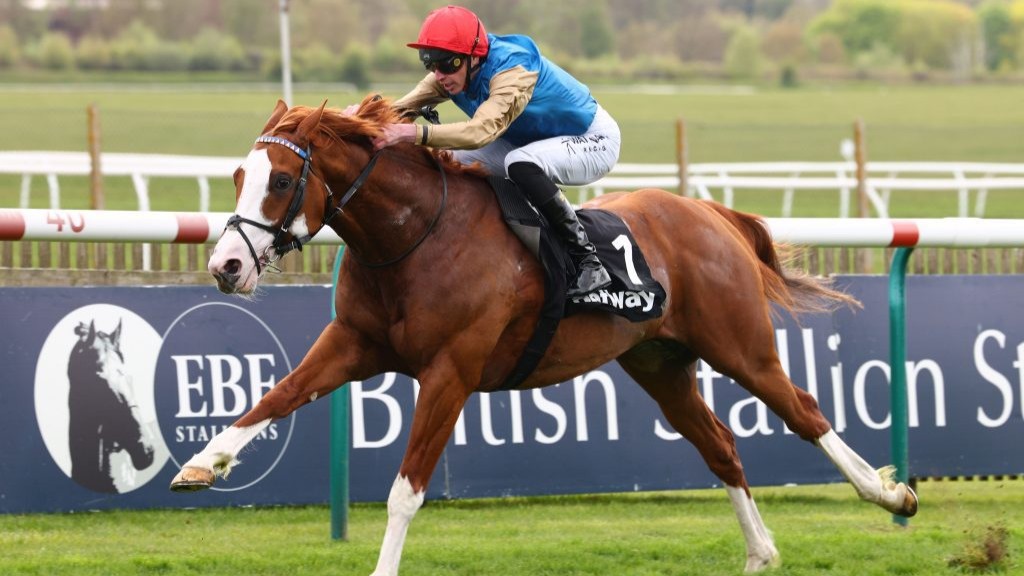
However, as we moved into the final quarter of a mile it became very clear that the 7/4 favourite was in a different league and looked to have improved significantly over the winter.
When sent on by James Doyle as they came into the dip, Damysus responded readily and pulled clear with ease.
Whilst we can raise doubts about the fitness of some of his rivals, this was still a superb effort at such an early point in the season and he looks more than capable of competing at a higher level.
The four-year-olds do have an exceptionally good record in this race in recent years, winning six of the last eight renewals, but this was one of the more impressive displays from Damysus, who clocked a winning time of 1:49.92.
That’s roughly par for the course in the race when we look at the recent renewals run on similar ground, but having raced three lengths behind the leader in a contest where all six runners recorded a finishing speed above 100 per cent, we can certainly give him a sectional upgrade.
Closing splits of 11.41, 11.25 and 12.19s were all ‘race best’ figures, with the 11.25s that he recorded for the penultimate furlong also proving to be the fastest split in the race overall.
Damysus reached his peak stride frequency figure of 2.4 strides per second at that point in the race and was three lengths clear in no time at all.
The only horse in the field to top 40mph on the speedometer (top speed 40.13mph), he had far too much for his rivals on Wednesday and ought to be heading towards bigger and better targets as a result.
“The only horse in the field to top 40mph on the speedometer (top speed 40.13mph), he had far too much for his rivals on Wednesday and ought to be heading towards bigger and better targets as a result.”
Perhaps the second-placed King’s Gambit can receive a small upgrade too.
He had the longest average stride length in the field at 25.53 ft and probably wasn’t suited by the undulations on the Rowley Mile as a result.
He certainly seemed to appreciate the rising ground at the end of the race as he galloped through the line to record the fastest run-out speed at 32.77 mph.
However, while that was promising, he doesn’t appear to be in the same league as his owner’s winner of the race, and I don’t see any case to be made for a different result in the future.
In his post-race interview with Racing TV, John Gosden implied that he might be seen next in either the Lockinge Stakes or the Prix d’Ispahan, but that good ground would be the key to him.
Damysus lost his way a little last season after a bad experience at Epsom in the Derby, where he cut his leg on the stalls and didn’t stay the trip.
However, he has now completed a hat trick of victories either side of his winter break and has run the fastest final two-furlong splits in each of those races.
Winning a race like the Earl of Sefton under a penalty shouldn’t be underestimated and it’s no surprise to see that he will be heading to Group 1 company next time after such a display.
Wood Ditton Maiden Stakes
There have been faster winners of the Wood Ditton, but I doubt that there have been too many winners of this race that produced such a striking impression as Portcullis when winning under Ryan Moore on Thursday afternoon.
A winning time of 1:38.79 ranked fourth of the last ten renewals of the race, but given the steady early pace and the fact that the first six horses to cross the line all recorded finishing speeds that were above 100 per cent, with the winner recording a figure of 105.6 per cent, I think we can upgrade the overall time.
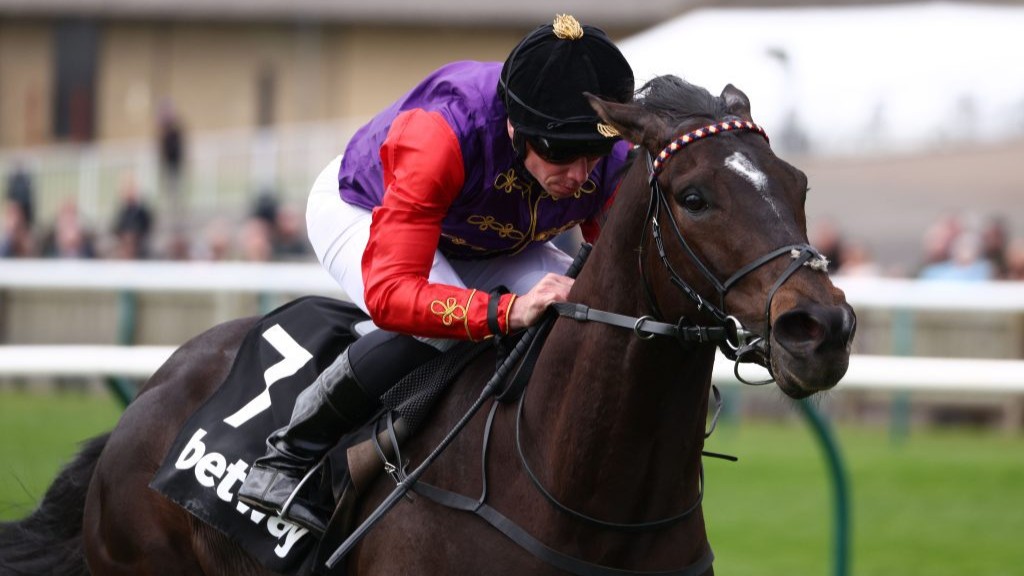
Portcullis was actually slow to leave the stalls, taking 7s to reach 30mph from the start (ranked tenth of ten) and clocking a fairly sedate 15.83s for the opening furlong.
However, whilst he had to be ridden into the race and encouraged to pick up the bit, the early leader Crown Knott controlled the pace and set a steady 12.02s pace for the second furlong.
So, with a race best 11.79s for the second furlong, Portcullis was soon back on terms and, having travelled nicely to the halfway point on the stands side of the group, he began to shape like the winner from the 4f pole.
Portcullis was the fastest horse in each of the final four furlong splits, including a final furlong split of 12.04s, which was half a second faster than anything else in the field and quicker than both Run to Freedom and Oxagon in the later Group races.
The slow pace assisted with that finishing effort to a point, but in what looked to be a very promising field, Portcullis showed a considerable amount of speed in the final quarter of a mile.
A late speed figure of 38.28 mph was easily the best figure of the ten runners (next best Dark Whisper recorded 36.9mph) and Ryan Moore’s post-race suggestion that he’d probably get 10f was supported by an impressive run-out speed of 34.58mph, which rounded off a very exciting debut.
Bred by HM The King, Portcullis is a Frankel Colt out of Castle Lady, winner of the Poule d’Essai des Pouliches for Henri-Alex Pantall in 2019.
Royally bred in every sense of the word, he showed plenty on his debut to suggest that he may be capable of becoming a Group horse this year.
“Royally bred in every sense of the word, he showed plenty on his debut to suggest that he may be capable of becoming a Group horse this year.”
John Gosden, however, was keen to keep expectations to a minimum at this stage, with a run in novice company under a penalty seeming to be his next port of call.
I’d have to argue that Portcullis was the most impressive of the meeting’s three-year-old winners and it’ll be hard to keep everyone’s feet on the ground until proven otherwise.
Craven Stakes
The late withdrawal of Hawk Mountain took some of the gloss from this race, but Oxagon still emerged with a fair degree of credit, and he’d appear to be the only serious contender for the 2,000 Guineas to emerge from this year’s Craven.
A lot has been made of the steady pace in this race and to a certain degree that is a valid point.
Oisin Murphy initially appeared reluctant to lead, but found himself in front of the far side group of three after opening furlong splits of 15.36 and 11.90s.
That wasn’t blistering pace by any means, but Oxagon quickened for each of the next five-furlong splits and, although that still left him with a finishing speed of 102.9 per cent, the overall time of 1:37.21 was faster than the Wood Ditton maiden winner and significantly quicker than Field of Gold in this race for the Gosdens 12 months ago.
He was quicker than the beaten favourite Hidden Force in every furlong and, having controlled the pace, kicked away coming out of the dip to win by two lengths.
“He was quicker than the beaten favourite Hidden Force in every furlong and, having controlled the pace, kicked away coming out of the dip to win by two lengths.”
There’s some context needed for this year’s Craven.
It was a small field and perhaps lacked the depth of some of the more recent renewals.
Under those circumstances, Oxagon was ideally placed and a look at the late speed data, which shows that the second-placed Avicenna was the faster finisher, might raise some doubts.
However, the application of the cheekpieces appeared to help Oxagon settle and travel and, having got progressively quicker over the middle five furlongs of the contest, he did enough of the leg work in front to emerge as a Guineas contender.
Maiden Fillies’ Stakes
I’ve included my notes on the fillies maiden winner Hassaleh primarily because she did a lot wrong in the early stages of this race and still managed to win fairly comfortably.
She was keen in the early stages and took a little bit of time to settle as William Buick sought to keep her covered up behind the early leader and the eventual runner-up Thursday Girl.
This wasn’t a particularly well run race, with the leader taking 27.66s to reach the 5f pole.
That meant it became a tactical race with a sprint finish.
Hassaleh recorded a finishing speed of 108.4 per cent and came home with furlong splits of 10.83 and 11.66s.
When a race is run at that kind of pace and the field then comes home at wide intervals, it can be very hard to assess the form.
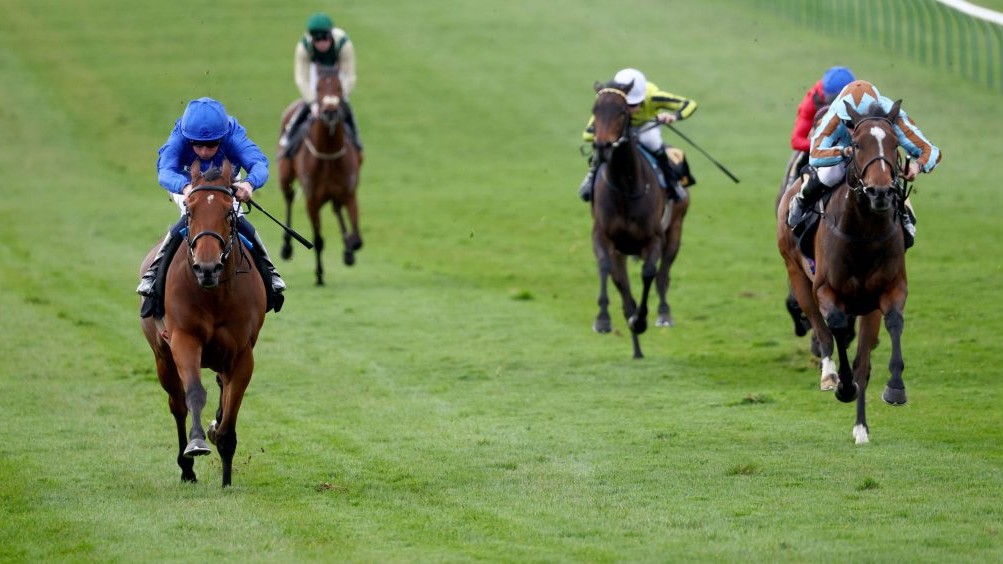
Hassaleh could only win the race as she found it and, having recorded the best top speed (41.73 mph) and run-out speed (34.38 mph), she emerged as a clear best on the day, even having time to change her lead legs when coming to the bottom of the dip.
She’s clearly been given time and was making her return from an absence of 311 days after finishing third on her only start as a two-year-old at Windsor.
Whilst it’s difficult to put a figure on this form, her stride data would offer some hope that she may be an above average filly.
At an average of 23.48 ft, she had the shortest stride in the field, but she increased that figure to a peak average of 24.59 ft in the latter part of the race.
That was an increase of 4.7 per cent, compared to increase of 2.7 per cent for the runner-up.
It’s a small point, but in a small field it can be hard to find too many clues, and I liked the way that she finished her race while adjusting to the undulations on the Rowley Mile.
The global database of sectional times, stride data and performance metrics is available through www.totalperformancedata.com
Catrin Nack profiled the German photographer with a fascinating life story
Catherine Day Phillips answered our questions in the latest edition of What They’re Thinking
Pat Comerford, the English language voice of UAE racing, also spoke to us in What They’re Thinking