

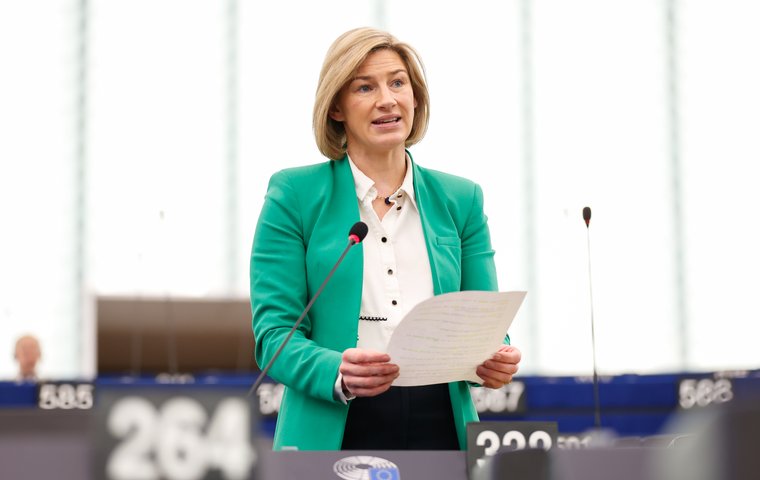
Nina Carberry made the jump from racing to politics, but plenty of politicians have sought solace in her sport.
Nina Carberry has always been a winner.
In 2006 she became the first Grade 1-winning female jump jockey in the British Isles. In 2011 she took the Irish Grand National on Organisedconfusion. In the Foxhunters’ of 2015 she rode On The Fringe to success over the Aintree Grand National fences.
In 2022, post-race-riding retirement, she was crowned heroine of RTÉ’s Dancing with the Stars, and this July it’ll be two years since the voters of Midlands-North West sent her to the European Parliament.
Her campaign for that election had featured an appearance from both outgoing Taoiseach Leo Varadkar and incoming Taoiseach Simon Harris at the Irish Grand National on Easter Monday.
Harris, by the way, happened to formally relinquished the Taoiseach position, and was demoted to Tánaiste, on 23rd January last year, just as Gowran was hosting its popular mid-week Thyestes fixture.
But back to Carberry who, of course, isn’t racing’s only representative to have taken public office.
Her compatriot John Magnier spent two-and-a-bit years in Ireland’s Seanad, nominated by Charles Haughey in his third stint at the helm of government.
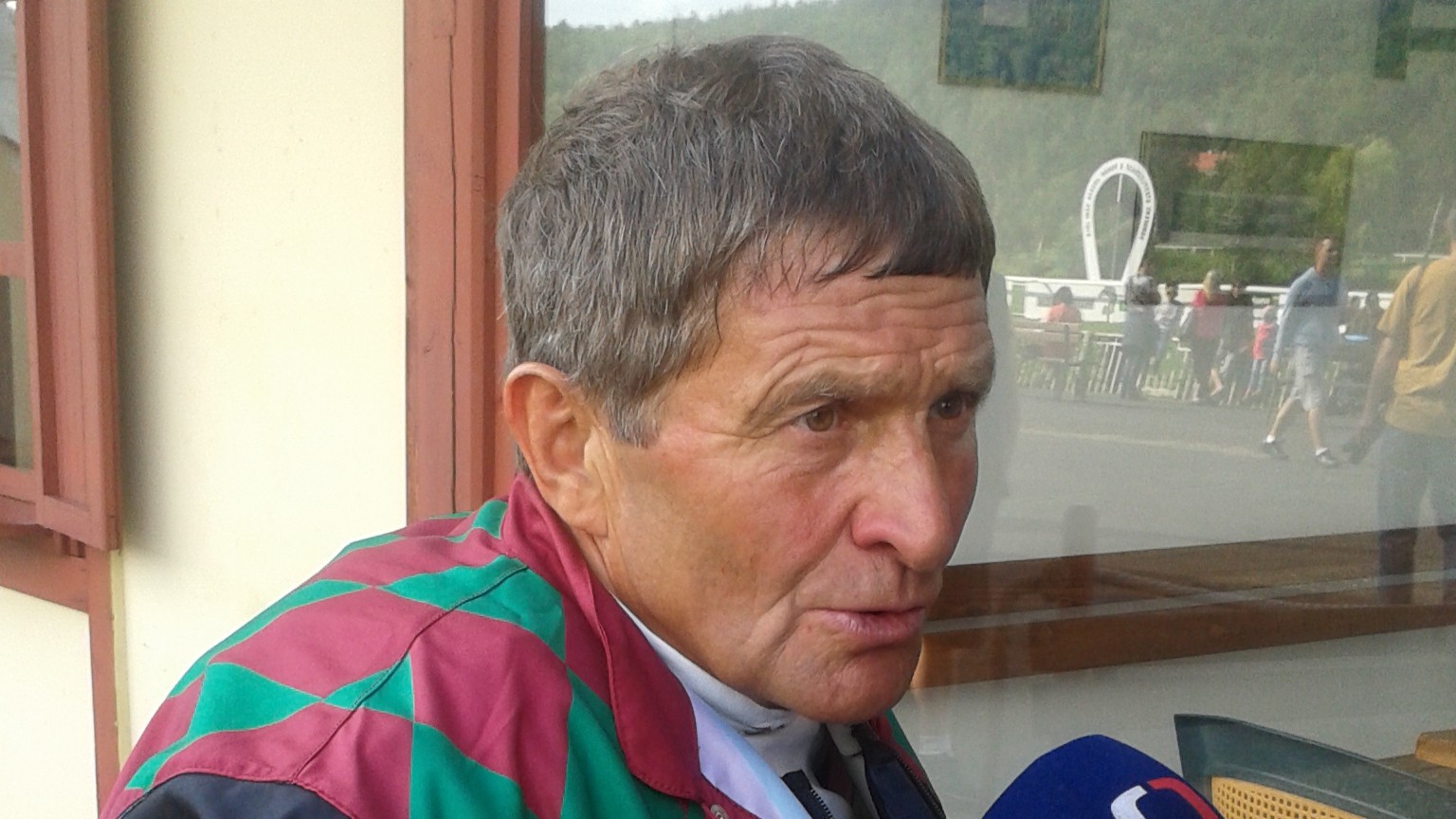
Her fellow steeplechaser, the eight-time Velká Pardubická-winning jockey Josef Váňa Sr (who also won the race ten times as a trainer and has broken ‘every bone in his body’) is a Czech sporting legend who has been part the country’s politics for years, both at a regional and national level.
Usually, however, it’s in the other direction that traffic flows, politicians sliding from debating chambers to grandstands as they seek solace from their day jobs, even if only for an afternoon at a time.
For some it’s a passing part-time interest or an occasional day out.
For others the pastime borders on passion.
As Sean Magee explained on this site 11 years ago, Winston Churchill gave considerable attention to the turf in his latter years, though he could match neither the achievements of his father, who owned the 1899 Oaks victrix L’Abesse De Jouarre, nor those of the 5th Earl of Rosebery, prime minister for little more than a year but owner of two Derby winners in that brief stint.
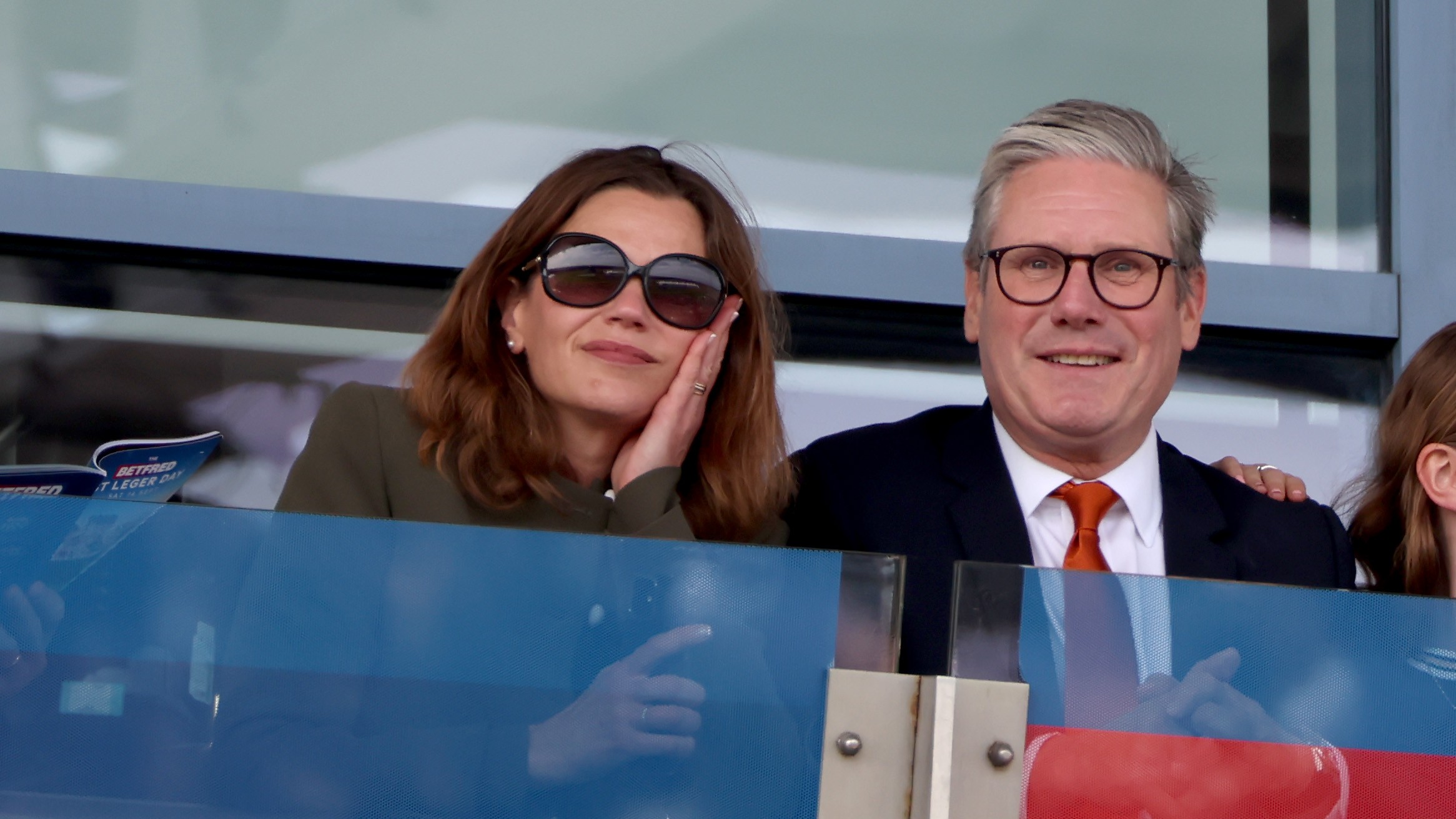
Sir Keir Starmer, Britain’s incumbent prime minister, is certainly no racing regular, though did find time to attend the St Leger only a couple of months into his premiership.
It’s unclear whether he went willingly or was dragged to it by his wife, a more frequent face at British racecourses, who even escaped to Sandown to watch the Eclipse a day after her husband began work in 10 Downing Street.
Starmer’s predecessor, Rishi Sunak, has been seen racing at Catterick and, during his time in the top job, also at local point-to-points in his Richmond constituency.
Over the Channel, François Fillon, prime minister of France under Nicolas Sarkozy from 2007 to 2012 (and, like Sarkozy, now a convicted felon) was director of a small track in Sablé sur Sarthe for a time, in the region in which he held a variety of positions over the decades.
One of his successors, François Bayrou, France’s prime minister for most of last year, has even more thorough thoroughbred involvement. He followed his father into small-time owning and breeding, reportedly after buying his first racehorse with the profits of a book he authored on the life of Henri V.
Bayrou’s near nine-month stint can be seen as a long tenure in the domestic chaos that has reigned since President Macron’s 2024 snap election, and certainly when matched against the meagre month-and-a-bit managed by British prime minister Liz Truss in 2022.
Truss resigned amid economic turmoil and a little over two years later generated ridicule when she appeared in the paddock at Glorious Goodwood.
As ITV’s Matt Chapman approached owner Dr Jim Hay, standing next to Truss, for comment on his horses, he either failed to recognise – or deemed it of so little interest – as to skip a quote from the former prime minister.
“That was Liz Truss, wasn’t it?” asked commentator Richard Hoiles as it cut to his voiceover. “… It was,” he continued seconds later. “My eyes aren’t deceiving me.”
Then, with perfect timing, just as the odds flashed up on screen, Hoiles added: “This market could crash at any minute.”
When Donald Trump was seen at the Kentucky Derby in 2022, a few months before the start – and swift end – of Truss’s premiership over the pond, he was between stints in the White House and there in large part for a fundraiser.
He has, however, issued several statements on the great race at various times.
Last year he described it as an “iconic American institution”.
Better than 2019, during his first term, when the prize was handed to Country House after Maximum Security’s disqualification.
Trump took to Twitter (as it was known then) to call the decision “not a good one”, describing it as a “rough & tumble race on a wet and sloppy track” and “actually, a beautiful thing” to watch.
“Only in these days of political correctness,” he added, “could such an overturn occur. The best horse did NOT win the Kentucky Derby - not even close!”
In 2021, when Medina Spirit was disqualified, he took to social media to claim that “even” the Kentucky Derby winner was a “junky”, and that was “emblematic” of “what was happening to our Country” without him in office.
Thirty years earlier, Trump had (enjoyed is probably not the right word) a fleeting, seemingly disastrous foray into racehorse ownership.
Scroll the internet and you’ll find reports of an eponymously-named DJ Trump who collapsed in a workout, had his hooves amputated and never raced, siring just 15-odd foals before he died as a five-year-old.
Racing is the sport of kings (and these days sheikhs too), but not necessarily of presidents.
That said, in a country where the industry is a mammoth employer and horses still form part of the national psyche, racecourse outings are surely essential for occupants of Áras an Uachtaráin. The Irish president’s responsibilities are largely ceremonial.
Michael D Higgins, for instance, who was in post from 2011 until the backend of last year, was a regular at Galway’s summer festival, a calendar highlight for the city of which was once mayor.
Over the Atlantic too, though (aside from Trump’s musings) engagement may nowadays be limited to such figures as former Congressman Tom Rooney, George Hearst (Democrat Senator from California) had significant involvement in the game during 1800s.
As did, at the start of that century, Andrew Jackson, America’s seventh president.
Back in constitutional monarchies, down under in Australia and New Zealand where, like Ireland, the sport keeps hold of at least some of the national conversation, it might be unsurprising that so many politicians have embraced racing both professionally and personally, and often both at once.
Michael McCormack, Australia’s deputy prime minister from 2018 to 2021, often posts Instagram images of trips to his local track at Wagga Wagga.
New Zealand keeps a minister for racing in its national government, a position currently occupied by New Zealand First leader Winston Peters, who juggles it with duties as foreign minister and Minister for Rail.
Peters has been deputy prime minister in three stints over the last 30 years, including under Jacinda Ardern, who, in her memoir, suggests that (stances of his New Zealand First party aside) Peters has a charming allure that can cut through to New Zealanders of a certain age.
The country’s current premier, Christopher Luxon, attended Champions Day at Ellerslie last month – and that wasn’t his first appearance at a Kiwi track during his time as head of government.
Sir John Key, who led the country for the better part of a decade (in post from 2008 to 2016), told the New Zealand Herald in 2022 that he had been keen on a career as a trainer, only to be thwarted by his mother, who favoured him taking up accountancy.
But, politicians’ bolthole as racing may often so be, should Key have gone into training, would his life have been grounded in a world dramatically disparate from the political sphere of competition and compromise?
Racing might, thankfully, be a less contentious arena, but both it and politics are populated by a collection of charismatic, often charming, characters.
And, like politics, there’s certainly no shortage of intrigue.
Laura King spoke to the Portuguese jockey rising ever higher in the Middle East
In the latest edition of Every Corner Covered, James Burn looks at Mauritius
We asked if stalls should be used to start jumps races in all corners of the world
View the latest Global Rankings for horses, owners, breeders, trainers and jockeys