

The fallout of his long expected resignation has led to calls for a governance review of the RCA, one of the BHA’s Board members.
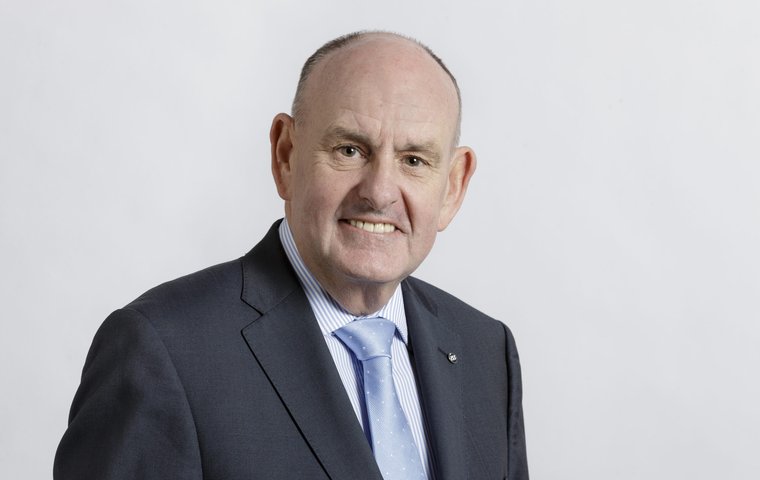
It has happened. The news we all expected. After just six months in the role, much of which was taken over by speculation of his departure, Charles Allen, Baron Allen of Kensington, has resigned as Chair of the British Horseracing Authority (BHA).
Speaking in a BHA statement, Lord Allen said he wished the sport well and said it had “great potential”.
The circumstances around the 69-year-old’s resignation need little discussion for followers of British racing, talk of his changes having been bubbling away in the months since he was appointed (in November 2024), before he took up the role (in September 2025, a delayed arrival after talks to accommodate his demands) and through the brief time he has been in post, a role he has held concurrently with positions at various other commercial and charitable organisations.
Allen, the BHA confirmed, only took role after the authority’s member organisations – the Racecourse Association (RA), Racehorse Owners Association (ROA), Thoroughbred Breeders’ Association (TBA) and licensed personnel – unanimously agreed that there should be “a completely independent board and that the BHA should have a commercial remit.”

That agreement, however, was thrown into doubt shortly after Allen’s tenure began, when discussions around a new approach to commercialising raceday data rights was opposed by the RA but supported by the ROA, TBA and licensed personnel.
The RA said it wouldn’t formally approve Allen’s governance and commercial demands unless he backed down on data rights, while the ROA, TBA and licensed personnel said it wouldn’t approve his governance and commercial demands unless he pressed ahead with data rights reforms.
Today’s BHA’s statement said simply that members, which nominate representatives to the BHA Board, hadn’t been able to reach agreement when it came to “changing the rules of the BHA” to facilitate “the achievement of those [Lord Allen’s governance and commercial] two goals as a change to the Articles requires unanimous support.”
Tom Kerr, editor of the Racing Post, wrote that Lord Allen’s departure leaves the sport “without direction at a time it can least afford it” and with a leadership group whose “fingerprints are all over” a “self-inflicted crisis.”
Speaking on his Nick Luck Daily podcast, Nick Luck similarly didn’t hold back, calling it “one to the sorriest episodes in the governance of the sport”.
In the wake of Allen’s resignation, Ascot, Goodwood, York and Newbury, along with the Jockey Club (who operate a host of high-profile courses) have, in a letter to the RCA’s Chair Wilf Walsh, called for an “urgent review” of the RCA’s governance to “support industry change.”
Speaking to Nick Luck Daily listeners, Ascot’s CEO Felicity Barnard called it “disappointing and frustrating” to learn that Lord Allen was stepping down.
“I think the signatories to that letter [to Wilf Walsh] are very clearly committed to the long-term health and future of this sport,” she explained. “In order to achieve longevity for racing, we believe – and have done for some time – that the BHA requires empowering. A way to get there is to have an independent board, and we believe that this is something that has been blocked by a number of stakeholders.”

Asked why she thought the current structure of the RCA isn’t fit for purpose, though she said it wasn’t for the letter’s signatories to create a new RCA structure (she hoped an independent review would do that instead), Barnard explained that “the voting members of the RCA are broadly represented in a sort of ‘one racecourse, one vote’ structure.”
She clarified this meant “votes are grouped to allow smaller courses, perhaps courses with different objectives, to have influence over other issues.”
Barnard said she didn’t want to direct complaints at small, independent venues, but said instead that “the way the votes are apportioned” mean there are “certain members of the RCA” that can have a “controlling vote each and every time something goes to the Board.”
Asked if she was referring specifically to Arena Racing Company (ARC), who look after a portfolio of British racecourses, Barnard admitted “there is a problem there, for sure” but thought “each and every entity” works “within and to the best interest of their business”, making governing a group of wildly different commercial models inherently difficult.
“I think we can be forgiven for finding things hard,” she stated, “but what we can’t be forgiven for is voting for the status quo time and time again… and still complaining about it.”
Barnard acknowledged that Ascot receives a smaller percentage of its income from media rights when compared to many other courses. This formed part of the reason she was calling for a review, to find a better way to accommodate the requests of courses with different commercial structures.
“Our focus is on delivering change from within,” she made clear, “but, by the end of April, if there isn’t a suitable plan in place, Ascot would be prepared to leave the RCA.”
That, of course, would leave Ascot without a say at British racing’s top table.
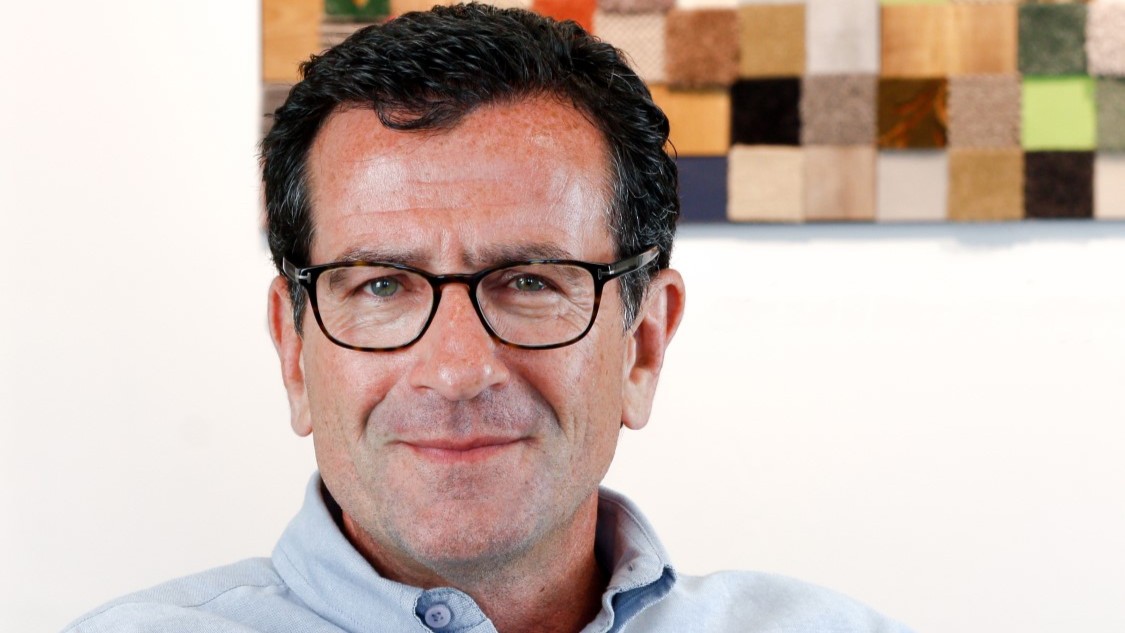
“I don’t make those statements, or indeed write the letter, lightly,” Barnard continued. “We’ve had, as you can imagine, lots of conversations and explored lots of different options for us around this. We’re very comfortable and confident in our position and relationships across the sport, particularly with the BHA.”
Barnard said that was because Ascot holds “a lot of seats on marketing committees and so on”, with many of its “very talented employees” involved.
“I think, speaking quite frankly,” she continued, “we feel at the moment that we don’t have much influence with the RCA and we’d probably have the same, if not better, influence out of it… but that’s if we don’t get a better governance model, which of course we know we can.”
Barnard finished by sharing that Ascot had been prepared to “sit down and have a conversation” about Lord Allen’s data and media rights proposals and would’ve considered approving them if it felt “a redistribution pooling change in the way that we managed our media rights would’ve, in the long-term, helped the sport to thrive and grow.”
She added that, though things might’ve been done “out of order”, she understood “a lot” of what Lord Allen was attempting and considered his plans “quite robust.”
So, without a CEO, and now without a chair, who has been left in charge of British racing for the time being?
The answer, presumably, is Brant Dunshea, the BHA’s acting CEO, who was also brought onto today’s episode of the Nick Luck Daily podcast.
“Right now,” said Dunshea, “and this is my view, as somebody who I guess is charged with leading the BHA on behalf of the sport, I think the important thing is that we must do the right thing. That includes ensuring we do the right thing in relation to governance, the right thing in relation to continuing to seek growth in our sport both financially and as a consumer proposition, and the right thing regarding the promotion of our sport and its participants, whether they be horses or people.”
Dunshea said the BHA Board would “continue to discuss what’s next in regard to interim arrangements”, as well as “what needs to follow in regard to the recruitment of a new chair and permanent CEO.”
He wouldn’t be drawn into whether he’d be appointed permanent CEO, calling it a matter for the Board and saying that throughout his time as acting Chief Executive, he’d conducted himself as if he were permanent CEO, committing himself “110 per cent” to “doing what’s in the best interests of British racing.”
Dunshea also said the RCA’s governance model is a matter for it alone and quite apart from the broader governance of the BHA.

“My position is that where we’ve got to is regrettable,” Dunshea stated. “As Chief Executive of the BHA, I’m certain that among the members – and I mean that collectively – there’s still a commitment to a greater level of independence in relation to the BHA.”
He added that he’s “very positive about the future” and believes he has seen “significant progress over the last period”, not least with a growth in attendances and increases in prize money since 2019/20.
“Things aren’t all bad and I’m actually quite optimistic about our ability to continue to collaborate with our members and bring the sport together in a positive way,” Dunshea concluded.
Racing TV has reported that Ben Wallace, former Secretary of State for Defence, is near the top of some betting markets as a possible replacement for Lord Allen as BHA Chair.
Kristen Manning spoke to the leadership of three studs affected by January’s bushfires in Victoria
Laura King spoke to former world-class jockey Colm O’Donoghue
Shane McNally looked at possible targets for emerging New Zealand star Well Written
View the latest Global Rankings for horses, owners, breeders, trainers and jockeys