

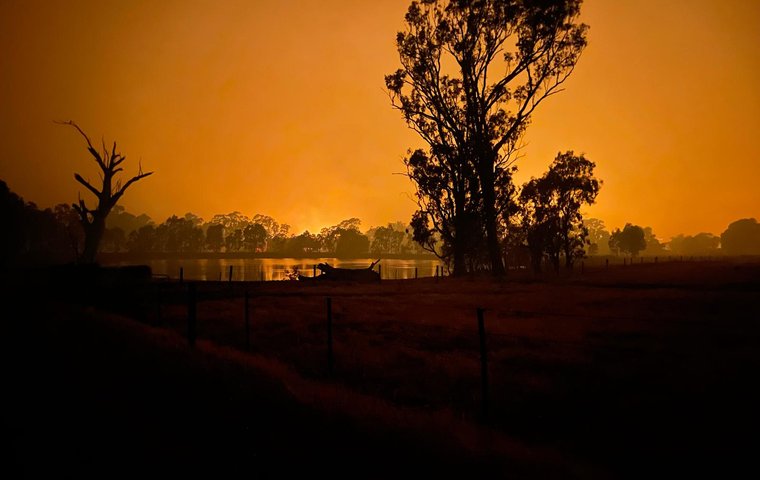
The January bushfires that swept across northern Victoria impacted many in the racing and breeding industry. Kristen Manning spoke to some of those affected.
Friday 9th January isn’t a day Michael Christian will forget in a hurry.
Just 24 hours earlier he’d been at the Gold Coast with Longwood’s Magic Millions yearlings.
A catastrophic fire warning was in place (one described by VicEmergency as ‘the worst across Victoria since Black Summer in 2019-20’) and it had Longwood firmly in its sights.
Christian flew home as soon as he could and “a race against time” awaited him.
“It was pretty scary,” he said, in awe of the dedication of his staff who “voluntarily rallied to work for 24 hours straight to get the horses safely off the farm.”
The priority was to move horses located closest to the danger area, but such was the commitment of workers and those who drove in floats from all around Victoria, all 165 horses were relocated.
“The priority was to move horses located closest to the danger area, but such was the commitment of workers and those who drove in floats from all around Victoria, all 165 horses were relocated.”
“The trucks just kept turning up and we had the last horse out of here by 6:30am,” Christian explained. “I owe a huge debt of gratitude to our staff. It was an incredible job they did that night. The support was mind-blowing and showed what an incredible industry this is.”
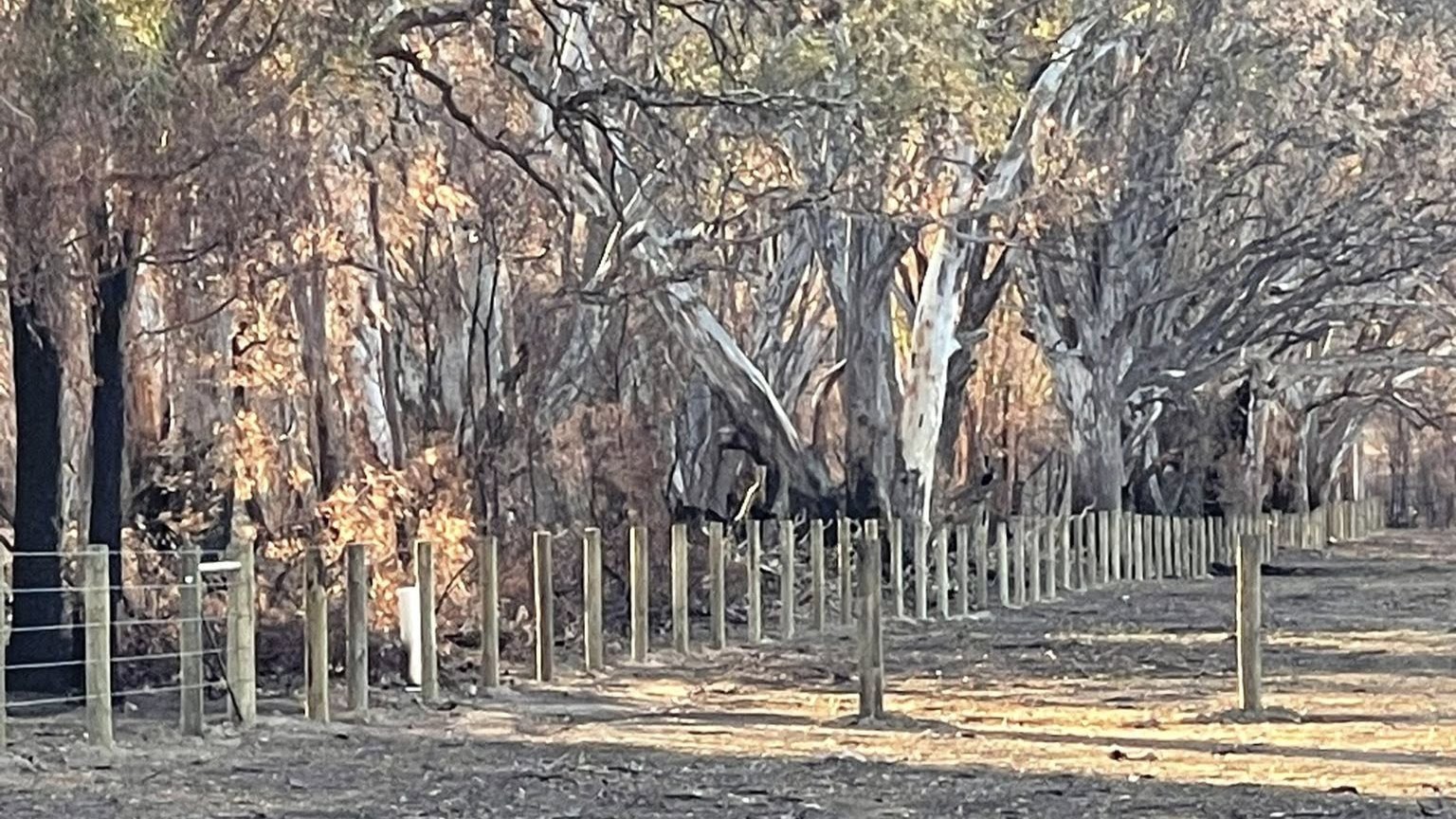
Christian said the recovery has been “steady”, noting that as of mid-February around half of Longwood’s horses were back on the farm and the perimeter fence reinstated.
“Fortunately, we weren’t as bad off as a lot of other farms in the area,” Christian continued, “but we still lost enough infrastructure, including our best barn in which we had all our hay stored, to make things challenging.”
Christian said the biggest challenge has been the return of all horses.
“The mares and foals are back,” he explained, “but we decided to outsource our Easter and Melbourne Premier Sale yearlings and a number of very kind farms – Rosemont, Shadow Hill, Two Bays, Collingrove, Widden and Yarraman – have been great in their support.”
Noting the financial repercussions, Christian admitted “we were probably underinsured, but that was our decision. Insurance is very expensive and it was one of those things we never really thought would happen to us.”
While Christian counts the economic and emotional tolls of the fires, he remains impressed with how the horses coped.
“They were very calm, almost oblivious to it all,” he stated.
That was something also noted by Larneuk Stud’s Neville Murdoch, who laughed as he said that “some of the buggers who take an hour to catch if they need a vet check were just so relaxed!”
Learning lessons from the 2014 fires that threatened Larneuk, Murdoch had his stallions transferred to another stud (Noor Elaine, breeders of Asfoora) a couple of days before fire hit.
The day before, he’d rung his fencing contractor and ordered 500 new posts. That turned out to be great foresight, with the fires claiming 5km of Larneuk’s fencing and some 25km of wiring, as well as half its pasture.
“The day before, [Neville Murdoch] had rung his fencing contractor and ordered 500 new posts. That turned out to be great foresight, with the fires claiming 5km of Larneuk’s fencing and some 25km of wiring, as well as half its pasture.”
“We’ve had to send around 40 horses off the farm and we’re going to reseed 250 acres,” said Murdoch. “We won’t have any real growth until the winter, and even then, only if we get the rain.”
It cost Murdoch two days and two nights of “grinding work” to fight the fires, and he’s grateful to his staff and friends who fought with him.
“I didn’t really want them there,” he shared, fearful that they were putting their lives at risk, “but they said: ‘your farm is our farm.’”
The task was made more difficult by the fact the power was off, Murdoch describing the scene as “an absolute nightmare.”
Five weeks or so later, he’s still paying the emotional price.
“I’ve been very lucky compared to many others,” he stated. “There are farms nearby that lost everything. But, even now, every day I go out and have a cry, seeing all that still needs to be done. The clean-up… well, you’ve no idea how big that is. We’ve spent hours every day just clearing trees, pulling up posts and winding up damaged wires.”
But though all of that has been emotionally demanding – seeing the farm he loves and has called home for decades in such a state – Murdoch has taken note of the goodness of people willing to help.
“A lot of the houses saved around here were done so by farmers and their small water tanks,” he said, also keen to acknowledge the efforts of BlazeAid, which was set up in the wake of the 2009 Black Saturday fires.
“It’s totally voluntary and we had about a dozen of them come here to help with the cleaning up,” Murdoch explained. “They worked all day for three days. People in their 60s and 70s, and one 80-year-old lady. They were all the nicest of nice people. What they did for us was amazing.”
BlazeAid helped with the clean-up at Leneva Park too, with that stud’s Mick Sharkie also amazed by the support on offer, taking positives out of a terrible situation.
“The way everyone rallied when the chips were down was great,” he explained. “During the actual catastrophe you just go into survival mode. It’s not until afterwards, when you’re left with such a big mess – one which has no guidebook to help you through – that the cracks start to appear.”
“The way everyone rallied when the chips were down was great,” [Mick Sharkie] explained. “During the actual catastrophe you just go into survival mode. It’s not until afterwards, when you’re left with such a big mess – one which has no guidebook to help you through – that the cracks start to appear.”
Sharkie said it resembled “adrenaline fatigue” to see normally calm people triggered by things that wouldn’t usually faze them.
The financial burdens are another factor.
“Here we are six weeks later and we’re still in conversation with the insurance company,” said Sharkie. “When you’ve a stud, you’ve a system in place… one which revolves around how many horses you’re working with, the staff numbers required and equipment.”
Sharkie said all that had been working well, but on 9th January, “everything changed”.
“The horses were gone,” he explained, “but all the costs are still there, and it takes time to regain the equilibrium.”
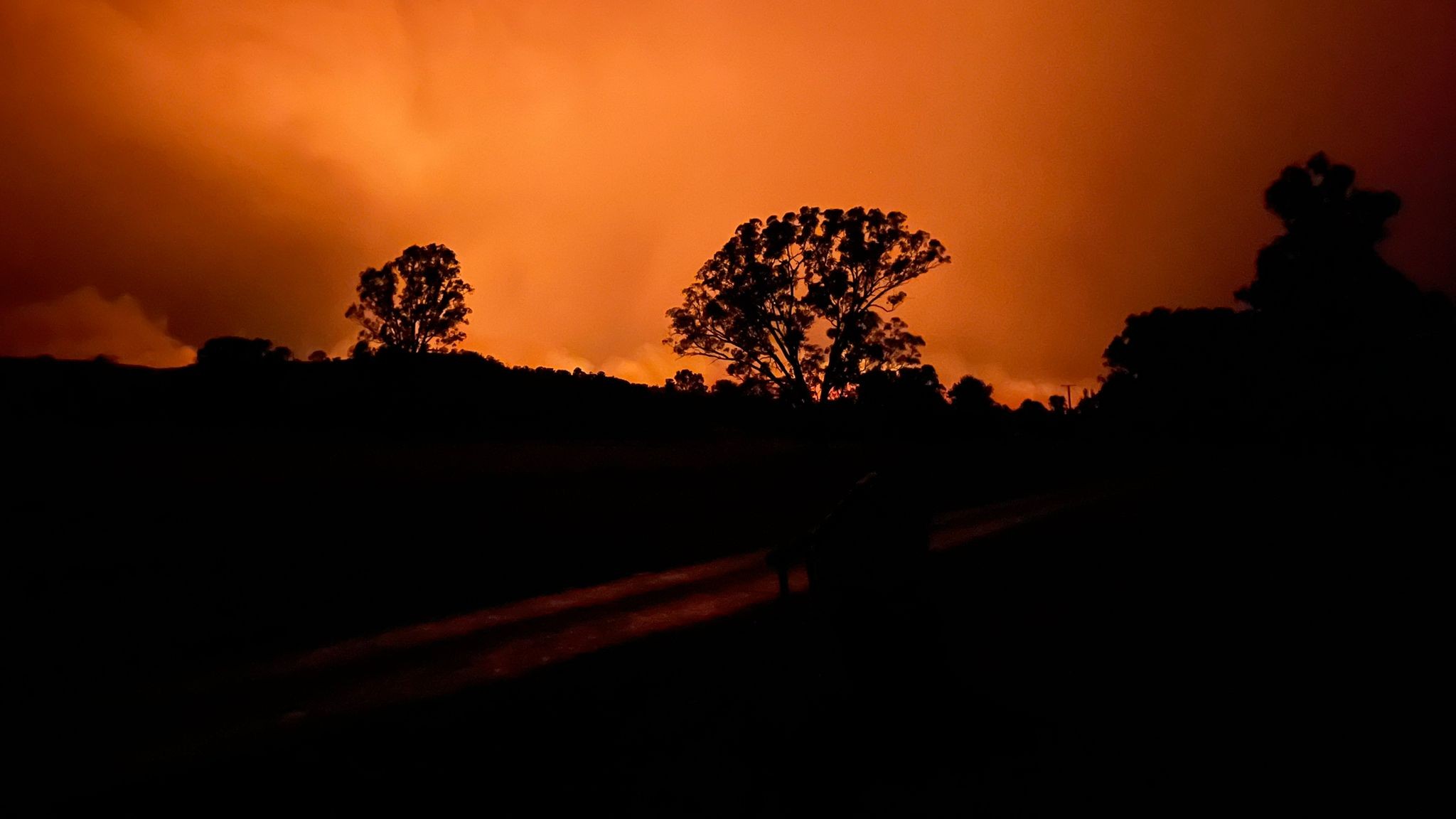
A self-confessed “city mouse”, Sharkie also noted the emotional impacts of damage to people’s land and homes.
“When country people put their roots down, they really put them down,” he stated. “Their homes are their patch and there’s a real sense of pride of place.”
Like Murdoch and Christian, Sharkie was amazed with how well the horses coped, Leneva evacuating 110 horses “and not one of them had even a scratch on them.”
Sharkie said it was “amazing” to watch mares taking care of their foals.
“They knew where to guide them,” he clarified. “It made me think we should trust them more. They know what they’re doing!”
Laura King caught up with former world-class jockey Colm O’Donoghue
Shane McNally looked into the career and possible targets of emerging New Zealand star Well Written
View the latest Global Rankings for horses, owners, breeders, trainers and jockeys