

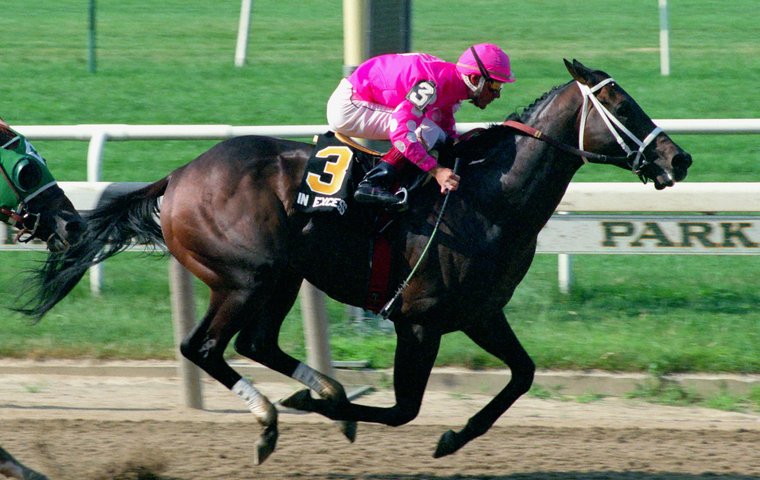
Jay Hovdey remembers ‘the Irish colt from California’ who appeared particularly comfortable racing at Belmont and settled into a steadily successful career at stud.

Gary Stevens has been known to praise his horses above and beyond the call of duty.
The Hall of Fame jockey, now retired and representing young riders, has a considerable inventory to sort through, so he can be forgiven if they sometimes get in each other’s way when he’s asked to name his favoured few.
And yet, Stevens has remained consistent when it comes to a certain Irish-bred colt whose name remains synonymous with speed, class, and historic accomplishments.
Stevens was just 28 at the time of their association, but he’d already been aboard the winners of a Kentucky Derby, a Santa Anita Handicap, an Arlington Million, a Hollywood Gold Cup and a Santa Anita Derby, so he knew what a proper horse could do.
Then came the Irish colt.
“Looking at what he did, he very well could’ve been the best horse I ever sat on,” Stevens insisted not long ago. “At the very least, he was the horse I compared all the other good ones to.”
Rock to racing
In the late 1980s and into the 90s, the Australian band INXS was the toast of the rock world, topping charts and soaring to multi-media fame thanks to constant exposure on the popular MTV music video rotation.
Given the status of INXS, it made perfect sense that a racehorse named In Excess would be every bit as charismatic.
Coming to full flower in 1991, In Excess unfurled a campaign that ranked as one of the most accomplished in decades.
The season was odd, however, pulled in non-traditional directions by the debut of the American Championship Racing Series and the increasing importance of the Breeders’ Cup as the arbiter of year-end awards.
In Excess sliced between those worlds, reaching heights of his own design – or at least those designed by his trainer, the softly-spoken Bruce Jackson, who was just a few years into a full commitment to thoroughbreds after working with Quarter horses.
Stevens and Jackson enjoy a bond of friendship beyond the limits of their professional ties. It was no surprise that the trainer would entrust his pal with the new shooter from Ireland.
“He was a beautiful horse to look at,” Stevens said. “Just perfect. And he had a great brain. I talked to him through my hands, with the slightest movement of a finger, or even a whisper.”
By way of Siberia
In Excess came from the first crop of Siberian Express, a son of Caro who was bred by Spendthrift Farm in Kentucky and sold for $230,000 to Mahmoud Foustok as a yearling.
He became a fine two-year-old and a French Classic winner at three, but he may have been hampered at stud by a weak female family that had long dissipated its bygone advantages through the influential mares Myrtlewood and Durazna.
The family tree of In Excess was not much better on his female side, beginning with his dam, Kanando, a daughter of Saulingo who won once in 14 tries.
This was slightly better than her dam, named Vi, who never won in 13 starts but did run second seven times.
Vi brought to the In Excess party her sire, Vilmorin, an English foal of war-torn 1943.

Vilmorin was a son of the accomplished Gold Bridge, winner of the 1933 and 1934 renewals of the Kings Stand (now King Charles III) Stakes. The son did his father proud by winning the post-war resurrection of the Kings Stand in 1946.
Vilmorin was not, at least in traditional terms, a successful sire of significant winners. But oh did he stir the blood in other ways.
His most noteworthy son from 16 crops was Quorum, winner of the 1957 Sussex Stakes, and Quorum wrote his name forever in the history books as the sire of Red Rum, three-time winner of the Grand National.
Vareta, winner of a Prix de la Forêt, was Vilmorin’s best filly. She produced Zeddaan, the powerhouse French miler of the late 1960s.
Jojo, a one-time winner by Vilmorin, is the dam of Queens Hussar, sire of Brigadier Gerard, no less. And for more contemporary audiences, the Queens Hussar connection leads through his Classic-winning daughter, Highclere, directly to Deep Impact, the Japanese superhorse.
For all the familial variety, In Excess ended up a five-generation outcross, which stirs the imagination of many breeding pundits. He was free to make his own way, as both a racehorse and as a stallion, unburdened by expectations.
In his case, he made the most of both careers.
Setting out
In Excess arrived on 8th April 1987 at the Irish farm of Ahmed Foustok, brother of Mahmoud and best known as the breeder and owner of the indefatigable Provideo, winner of 16 races as a two-year-old.
Coming along five years after Provideo’s onslaught, In Excess must’ve been a disappointment.
Trained by Bill O’Gorman, he ran only twice at two, winning an October maiden event at Lingfield, then embarked upon a modest, four-race campaign at three that ended with a disappointing run in the Jersey Stakes at Royal Ascot.
Prospected by the California-based agent Richard Duggan, the colt was summarily sold stateside to Jack Munari, a golf course developer from Paso Robles, California, and sent to Jackson, who formerly trained Munari’s Quarter horses.
“I’d actually been to Bill O’Gorman’s yard on a trip to England and saw In Excess while I was there,” Jackson said. “At that time, they never thought he’d be for sale, because they thought he was a high-class horse. But he wasn’t handling the pressure of travelling to the races. He was pretty hot-headed.”
Jackson ran In Excess right out of quarantine in a division of the Oceanside Stakes on opening day of the 1990 Del Mar summer season.
He finished second in the mile on firm turf, then came back in the Del Mar Derby to go unplaced in a roughly run mile and one-eighth.
“I could hardly get him saddled that day,” Jackson said. “He was standing straight up most of the time. I finally got the saddle on, but he’d pretty much already lost the race.”
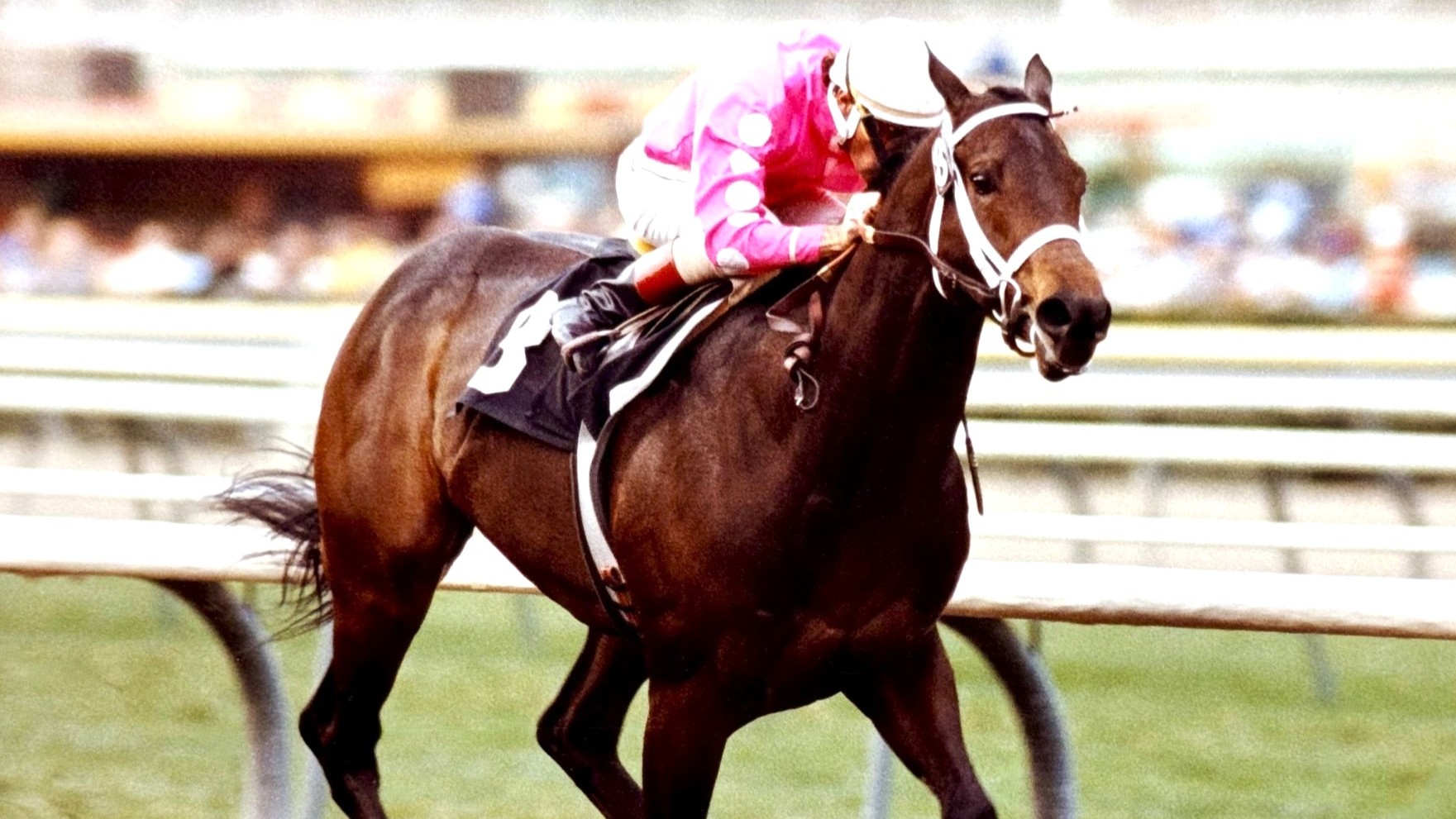
Jackson continued to play the grass card with a September trip to Louisiana Downs for the Temperence Hill Stakes, won by In Excess in an eight-length romp.
That left three more opportunities back in California against his three-year-old contemporaries.
He beat them in the Volante Handicap at Santa Anita, finished fourth to the season’s male turf champ, Itsallgreektome, in the Hollywood Derby, then took the San Gabriel Handicap back at Santa Anita on New Year’s Eve.
Diggin’ it on the dirt
The calendar turned, and Jackson made his move. From the start, In Excess had been working like a freak on the dirt.
“The first time Bruce had me work him was at Santa Anita,” Stevens said. “He asked me to go five-eighths in around 1:02. I actually thought I went on the slow side, and walking back through the gap I could see Jackson wasn’t happy. I apologised for maybe going a little too slow.”
Jackson fired back: “Slow! You went in 58-and-two!”
From then on, Stevens compensated.
“If Bruce wanted 1:01, I’d move him out to the middle of the racetrack and never let him know I was working him,” Stevens said. “He’d be ears up and gliding, going in a minute like most horses would go in 1:04.”
“He’d be ears up and gliding, said Gary Stevens, “going in a minute like most horses would go in 1:04.”
In Excess made his main track debut on 19th January 1991 in the San Fernando Stakes at Santa Anita. The field included 1990 Belmont Stakes winner Go and Go, Arkansas Derby winner Silver Ending and Malibu Stakes winner Pleasant Tap.
Off at 11-1, In Excess humbled the assembled company with a four-length victory in a Stakes record: 1:46 3/5 for the mile and one-eighth.
After that, In Excess was faced with his first ten-furlong tests in the Strub Stakes and Santa Anita Handicap.
He was third in one and fourth in the other, but Jackson wasn’t discouraged. He regrouped and pointed toward the Hollywood Park meet, beginning with the Mervyn LeRoy Handicap, a Grade 1 race at a mile and one-sixteenth to be run on 20th May.
“He came up with a hind foot abscess that broke a couple days before the race, so we had to scratch,” Jackson said. “I was actually jogging him down the dirt road at Hollywood Park when the abscess popped. The next day Stevens worked him, and we loaded him on the plane to New York. He’d never have got to the Met Mile otherwise.”
Abscess to success
On such small things history can turn.
In Excess immediately took to the pastoral atmosphere of the Belmont Park stables. At first, the sandy main track was a concern, but a nice spring rain tightened the surface.
The historic Metropolitan Handicap was scheduled for Memorial Day, 27th May, promising a field that would include the East Coast middle-distance heavyweights Housebuster and Rubiano, along with Midwestern ace Black Tie Affair.
Stevens had already committed to the mount on Exbourne for the Hollywood Turf Invitational on Memorial Day, before Jackson decided on the Met.
Patrick Valenzuela stepped in for a one-shot ride on In Excess and made the most of the opportunity.
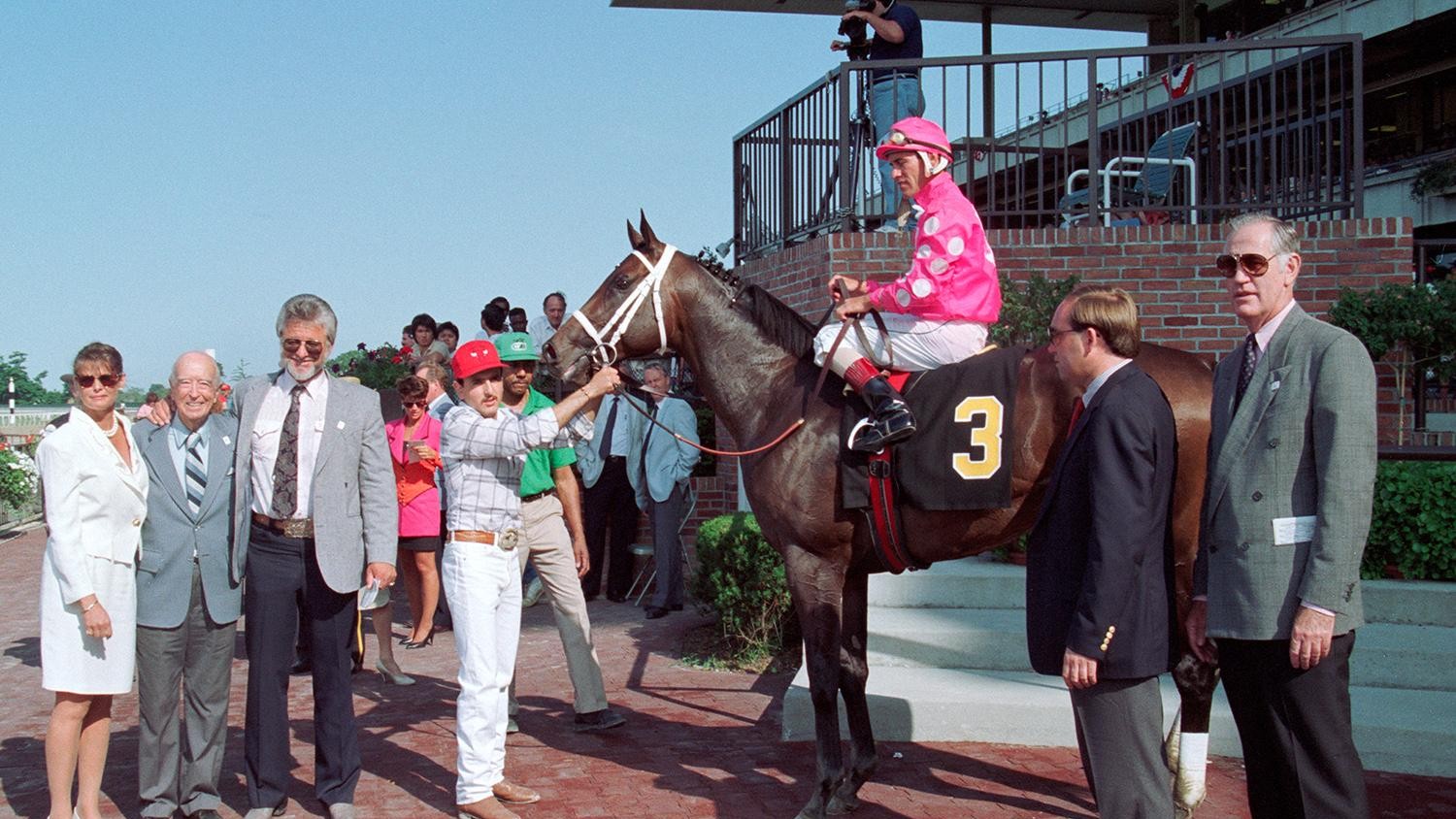
After breaking a step slow, In Excess darted up through the field to sit comfortably just off front-running Housebuster, then took command around the turn to draw off for a 2 1/4-length triumph.
The Irish colt from California had found a home where he could relax and let his true ability shine through.
“You had to pick the right places for him,” Jackson said. “At Belmont and Saratoga, he never saw the racetrack until he was saddled. That worked for him. I told his groom, Jose Escavitez, that he’d be gone about ten days. It ended up almost six months he was back there.”
Stevens was back on board for the Suburban Handicap, at a mile and a quarter on the Fourth of July. In Excess celebrated their reunion with a one-length score over Excelsior Handicap winner Chief Honcho in a track record 1:58.33.
By then, his winning races were following a distinct pattern: track the early pace within striking distance, take over on the turn and into the stretch, then put the game away in the final eighth of a mile.
Settling into a rhythm
“He had that high cruising speed,” Stevens said, “and then he had a turn of foot on the dirt like good horses have on the turf. He could accelerate coming off the turn and hit a whole new gear when I’d chirp to him at the 3/16ths.
“He looked like he was winning his races easily,” Stevens continued. “He’d pull up, take a deep breath, and roll his eyes back at you saying: ‘What now, boss?’, then be cooled out before he left the winner’s circle. But I think he emptied out more of the gas tank than he let on. Good horses will do that.”
In Excess also enjoyed the services of Corey Black, the successful West Coast jockey who was riding in New York that season.
“Corey was working him all the time,” Jackson said. “They got along real well.”
After the Suburban it was on to Saratoga for the Whitney Handicap of 3rd August.
Stevens rode six races at Del Mar on 2nd August, then hopped on a red-eye flight to New York.
After arriving the next morning, he was catching a nap in the room when his valet shook him awake with the message that Jackson needed to talk.
“[Stevens] was catching a nap in the room when his valet shook him awake with the message that Jackson needed to talk.”
“You’re not riding an even-money shot today,” the trainer told his rider.
This got the jockey’s attention.
“We’ve had a little thing with his foot,” Jackson went on, “so be conservative with him early. I might be wrong, but I thought you should know.”
As it turned out, there was no reason to worry. In Excess went once around the nine-furlong course to win by 3 1/4 lengths over his Suburban rival, Chief Honcho, in spite of Jackson’s concerns.
“It was better hearing that as not, but I didn’t go out there with a lot of confidence,” Stevens said. “All I was thinking was that if I got beat at 1-2 they’d be hauling me out of there in a cement truck. Instead, he ran like a superstar.”
Established out east
Even in the wake of the stunning Whitney, the knee-jerk racing media continued to refer to In Excess as the “California invader.”
Finally, Jackson confronted a veteran writer with the idea that the colt was bred in Ireland, raced in England and hadn’t set foot on California soil since the middle of May.
“They finally bought into the idea that he was a New York horse,” Jackson said.
In Excess was truly flying the New York flag in the 1991 Woodward Stakes, run on 15th September at Belmont Park.
“In Excess was truly flying the New York flag in the 1991 Woodward Stakes, run on 15th September at Belmont Park.”
The Woodward marked the final event in the American Championship Racing Series and bonus prize money was on the line for the participants who’d followed the ACRS around the country.
The series had travelled from Florida to California, Arkansas, New York, Maryland, New Jersey, and even New Hampshire.
No horse had made all the dates, but there was enough participation to earn media praise and wonder aloud why In Excess had left all that cash on the table.
“Just look at the schedule,” Jackson said. “We’d gotten him to where he was happy in the one place where there were very good races. It made no sense to go chasing around.”
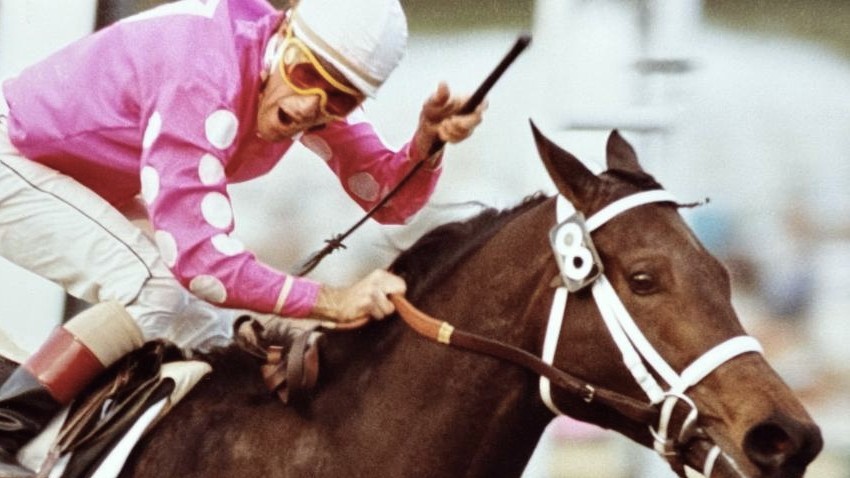 ACRS winners Farma Way, Festin and Jolie’s Halo showed up for the Woodward, along with Kentucky Derby winner Strike The Gold.
But by then Belmont Park was very much the House of In Excess. With silken efficiency, the Munari colt sailed home nearly two lengths in front of Farma Way.
Unfortunately, coverage of the race centred on the prize money reported in the official chart.
In Excess won $300,000 from the advertised purse of $500,000, while Farma Way came away with $830,000 and Festin with $435,000, which included the final tabulation of ACRS money.
Harvey Pack, the scrappy New York commentator, wasn’t pleased.
“There’s something wrong,” Pack told his television audience. “To get all excited after the race about Farma Way and Festin, who got more money than In Excess, takes away from the race. In Excess won the Woodward, his fourth straight Grade 1.”
In fact, no horse had won those four races in a single season – the Metropolitan, Suburban, Whitney and Woodward – since four-year-old Kelso in 1961. And when a horse dares to place his name alongside a champion as worshipped as Kelso, attention should be paid.
Honours elude him
Later in 1961, Kelso added a victory in the Jockey Club Gold Cup and a close second in the Washington DC International to a record that earned a second Horse of the Year title.
In Excess, on the other hand, wasn’t able to embellish on his New York domination.
After settling business with Farma Way and Festin in the Woodward, essentially neutralising the results of the American Championship Racing Series, In Excess was allowed to catch his breath before what amounted to a command appearance at the 1991 Breeders’ Cup, to be held at chilly Churchill Downs on the first Saturday in November.
Daily Racing Form’s Joe Hirsch, in his annual review of the season, declared without hesitation: “With the completion of the Woodward, In Excess was Horse of the Year. Unfortunately for him, there was one more race to be run, the Breeders’ Cup Classic.”
“Daily Racing Form’s Joe Hirsch, in his annual review of the season, declared without hesitation: ‘With the completion of the Woodward, In Excess was Horse of the Year. Unfortunately for him, there was one more race to be run, the Breeders’ Cup Classic.’”
Training now in a fishbowl, Jackson sensed the hourglass was running low.
The problem hoof was flaring again. His colt had been in steady training from the minute he arrived in California, in July of 1990, and had raced 13 times over 14 months.
His followers, led by owner Munari, assumed there’d be nothing less than a crowning performance in the Breeders’ Cup Classic, but the reality on the ground was different.
“I didn’t want to run,” Jackson said. “Churchill Downs was never a good place for him.”
Two poor works over the Churchill Downs surface by In Excess caused further concern. Corey Black, in town for Jackson, gave thumbs down after both moves.
The trainer tried taking his star down the road for an afternoon of peace and quiet at Keeneland, but that was only a temporary fix.
Munari, caught up in the Breeders’ Cup whirl, was determined In Excess would appear on the day, forcing Jackson to compromise by entering the Mile on the grass, hoping for firm ground.
“I worked him on the turf and he worked very good,” Jackson said. “But then it rained and the course became soggy. He was done leaving the paddock.”
In Excess went through the motions and came home ninth behind Opening Verse in the Mile, which was run in 1:37.59, or about 30 lengths slower than the course record.
Later in the day, Black Tie Affair won the Classic, six months after finishing a dozen lengths behind In Excess in the Metropolitan.
The backlash was brutal. The nation’s racing media, seduced by the nationally-televised ACRS, had elevated its participants to gladiatorial status while demeaning In Excess for thoroughly dominating a series of time-honoured New York events, suddenly rendered as merely creampuff contests.
“The nation’s racing media, seduced by the nationally-televised ACRS, had elevated its participants to gladiatorial status while demeaning In Excess for thoroughly dominating a series of time-honoured New York events, suddenly rendered as merely creampuff contests.”
“Aside from [the Woodward], trainer Bruce Jackson consistently looked for soft spots for his colt and then avoided the Classic, fearing that In Excess wouldn’t like the Churchill Downs racing strip or the 1 1/4-mile distance,” wrote Andrew Beyer of the Washington Post. “Voters for the Eclipse Award certainly shouldn’t want to honour horses for taking the path of least resistance or encourage other trainers to earn championships the way Jackson tried to.”
The final verdict revealed a stunning rebuke. Black Tie Affair – winner of races in Illinois, Michigan, New Jersey, Nebraska, and Kentucky – received 187 of the 283 votes cast for Horse of the Year.
Champion Filly Dance Smartly came next with 51 votes, while Arazi, the two-year-old French sensation, got 27.
In Excess, the forgotten warrior, ended up with just 13 voters who remained loyal to the cause.
“I’d have sooner sat in the jocks’ room than have happen what happened that day,” Stevens said of the Breeders’ Cup. “If they’d just come out and said he’s got that foot problem again and came out of the Breeders’ Cup, there’s no doubt in my mind In Excess would’ve been Horse of the Year.”
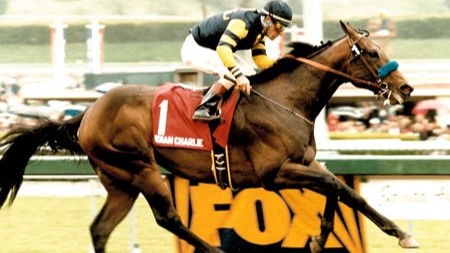
After a quiet winter back in California, In Excess emerged at age five with a close second in the San Antonio Handicap, giving the winner eight pounds.
Another poor effort in the Santa Anita Handicap prompted Jackson to head east once again, where In Excess ran well without winning either the Carter Handicap or the Metropolitan.
Farewell racetrack, hello stud
The losing had gone on too long, however, and after a fifth-place finish behind Strike The Gold and Pleasant Tap in the Nassau County Handicap, In Excess was retired with a record of 11 wins in 25 starts and earnings of $1.7m.
Munari declined offers to stand In Excess in Kentucky and instead sent him straight to his Rancho Why Worry in Paso Robles.
Within a few seasons, Mike Pegram entered the picture, seeking a stallion to complement his growing thoroughbred stable, and ended up in a deal with Frank ‘Scoop’ Vessels III to place In Excess at the Vessels farm near Bonsall, California.
“Mike Pegram entered the picture, seeking a stallion to complement his growing thoroughbred stable, and ended up in a deal with Frank ‘Scoop’ Vessels III to place In Excess at the Vessels farm near Bonsall, California.”
Over 18 crops, In Excess sired 56 stakes winners, among them 16 California state champions, who earned more than $44m.
He continues to enjoy a lasting legacy through his son Indian Charlie, sire of champion two-year-old Uncle Mo, who’s in the process of siring a powerful male line through such sons as Nyquist, Yaupon, Golden Pal, Kingsbarns, and Arabian Knight.
In Excess died at Vessels Farm on 17th May 2013, aged 26.
His remains were buried by those of fellow farm stallion Free House near a peaceful pond, with a meditation bench nearby for those who choose to contemplate the everlasting impact of the hot-blooded colt from Ireland.
• Read all Jay Hovdey's features in his Favorite Racehorses series
‘A devastating front-runner, calm and collected, and difficult to pass’ – Jay Hovdey on Little Mike
‘The little black colt who humbled the best of his generation’ – Jay Hovdey on Snow Chief
View the latest TRC Global Rankings for horses / jockeys / trainers / sires