


JA McGrath talks to the French trainer who conquered the globe with his horses in 2025, winning major races at the highest level in four countries
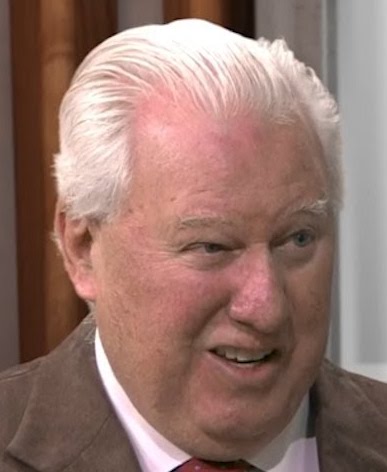 Oh, it was a very good year. At a point in the calendar when it is only natural to look back across the landscape of the recent past, few can do so from such a high vantage point as Francis-Henri Graffard, the French trainer who enjoyed the most remarkable campaign in 2025, not just in Europe but also in the US and Japan.
At home, there were two great watershed moments, a first coronation as champion trainer and a first victory in the Prix de l’Arc de Triomphe, one of 14 G1 wins worldwide in 2025. Abroad, there was a breakthrough triumph at the Breeders’ Cup, success in two signature events of the British year in the King George VI & Queen Elizabeth Stakes and the Champion Stakes, and a rare, remarkable final flourish with victory in the Japan Cup.
Graffard, 48, assumed an enormous responsibility four years ago when taking over as trainer for the Aga Khan Studs empire at Aiglemont stables, on the outskirts of Chantilly. He filled the vacancy left by the retirement of Alain de Royer-Dupre and the flow of big-race success has been unceasing, with Calandagan and Daryz, his two standard-bearers of 2025, carrying the iconic green and red silks.
The four-year-old gelding Calandagan is one of the last outstanding horses bred by Aga Khan IV, who died in February 2025. He had already been crowned European Horse of the Year with three major G1s in the bag – the Grand Prix de Saint-Cloud, the King George and the Champion Stakes – before his history-defying tilt at the Japan Cup in Tokyo.
No European-trained horse had won the race for 20 years, but a closer study of the race’s conditions and bonus scheme made reasons for this ambitious bid crystal clear. The King George was a designated international bonus race, meaning that the winner at Ascot would be eligible for a $3 million bonus should he also win the Japan Cup – so Calandagan was competing for a total prize-money haul of more than $6m.
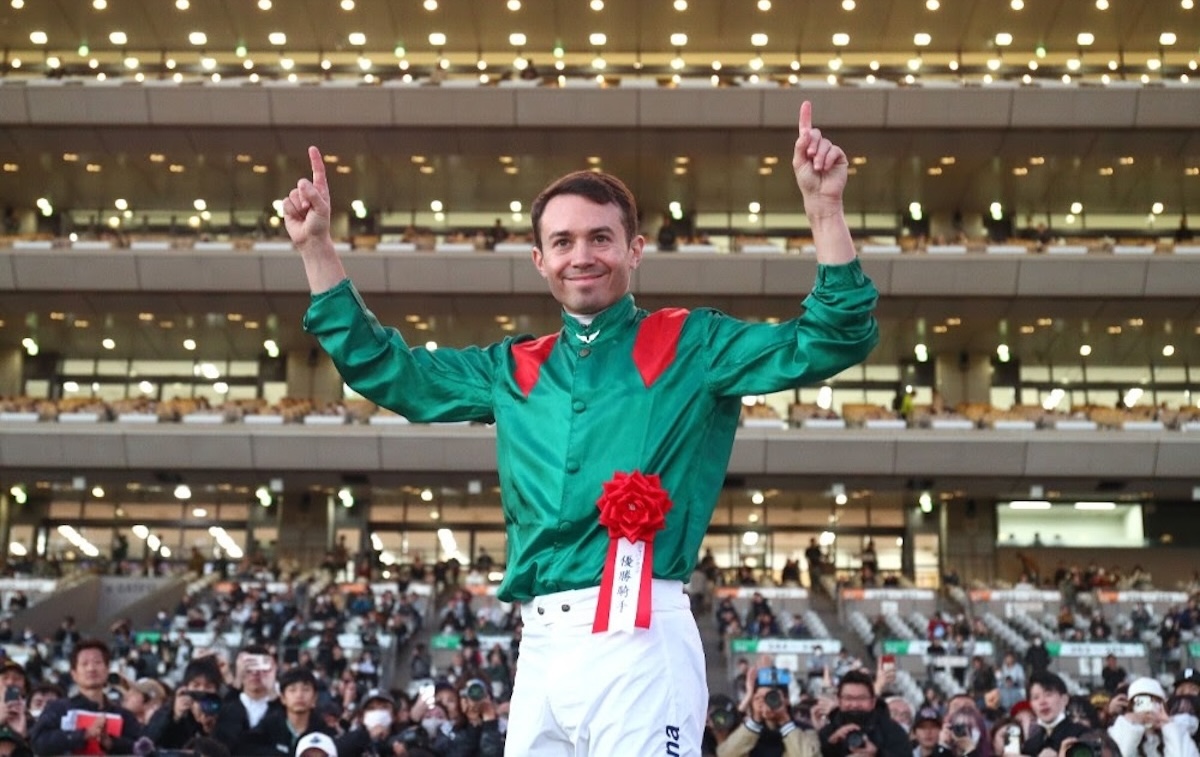 And he scooped the pot in what was arguably the most gripping G1 finish of the entire season as, despite the peril generated by the proximity of a loose horse, Calandagan got up in the final strides under jockey Mickael Barzalona to pip the local favourite Masquerade Ball by a head.
Graffard was well aware of the magnitude of his achievement. “Calandagan gave me the greatest moment in the Japan Cup,” he says. “It’s hard to say that when you have also won the Arc, the King George and the Breeders’ Cup in the same year.
Incredible race
“But the Japan Cup, it’s so hard to do it. It was an incredible race to watch, and you feel you have done something big by winning this race.”
Given Calandagan’s evident talent, it is hard to believe that his campaign commenced on a slightly tentative note. In fact, halfway through the season, the critics were rounding on the son of Gleneagles to such an extent that Graffard felt obliged to step in publicly.
Crisis point was reached when Calandagan was beaten by Jan Brueghel in the Coronation Cup at Epsom in June, his fourth consecutive second placing. The insinuation was that he was not genuine, not going through with his effort at the end of his races. Some critics called for blinkers to be applied, something regarded by purists as the ultimate insult.
“I felt what they were saying was unkind and inaccurate,” says Graffard. “I thought they were unfair in their criticism. He had been beaten by some very good horses, and also there were legitimate excuses.
 “Look at those who beat him. City Of Troy [Juddmonte International], Anmaat [Champion Stakes], Danon Decile [Dubai Sheema Classic] and Jan Brueghel [Coronation Cup] – all of them very good horses.
“Immediately after the Coronation Cup, I was disappointed but, in retrospect, I felt he probably needed the race at Epsom. It had been two months since Meydan, and before that he’d been off for five and a half months between Ascot and Dubai.”
Very impressive
Full restoration of this wonderful racehorse’s reputation began when he notched his first G1 win in the Grand Prix de Saint-Cloud – “I thought he was very impressive that day,” adds Graffard – continued in the King George, and was gloriously completed with an authoritative score over the top-class Ombudsman in the Champion Stakes.
That victory came less than two weeks after Graffard had written his name into French racing’s most prestigious roll of honour by landing his first Arc with Daryz, who bounced back to his best after a couple of defeats when causing a minor upset with a head defeat of the brilliant filly Minnie Hauk.
“We’ve had big victories before, but now I realise just how special the Arc truly is,” he said at the time. “The emotions are magnified – by the crowd, the atmosphere, and especially by these colours with such history.
“When I was a boy at home in Burgundy, watching the races with my grandfather, I dreamed of these horses, these silks, and this race. This sport is built on emotion – and today is the ultimate example.
“We always thought that if we ever had a colt good enough for the Arc, it would be Daryz,” he added. “To get here, we took the long road, even crossing the Channel [for defeat in the Juddmonte International], but he needed experience.
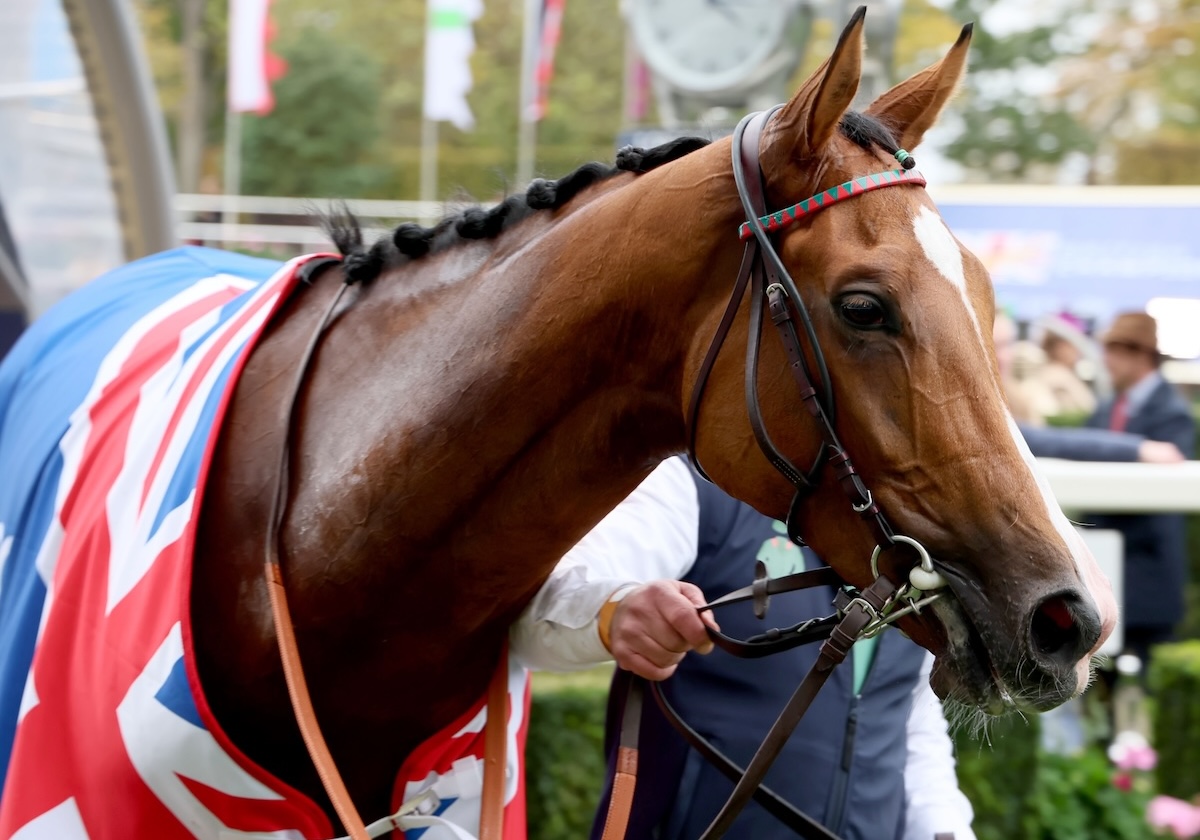 “You have to risk defeat in order to win later. Even though York didn’t go his way, he learned a lot from that trip – from the race, the travel, the atmosphere – and it all paid off.”
Cool competitor
We learned more about Graffard this year than merely his ability to win Arcs and Japan Cups. The normally serene, reserved presence of a cool competitor, who leaves nothing to chance in his preparation of stellar horses for the biggest targets, often gives way to emotions that take hold in the closing stages of a race. He can shout them home with the best of them.
It is not a flaw in his make-up. Quite the contrary. It is a commendable feature of a passionate trainer, who wears his heart on his sleeve and is prepared to go to any lengths to defend his horses and their reputations whenever required – and to celebrate their triumphs on the racecourse in the most demonstrative style.
A reminder of that raw emotion came when Graffard made a long-anticipated breakthrough at the Breeders’ Cup, the three-year-old filly Gezora storming down the outside to take the Filly & Mare Turf at Del Mar in early November.
Sensing the possibilities at a relatively early stage, Graffard started roaring home his Prix de Diane winner some way from the finishing line. Whatever the experience took out of Gezora, it probably matched the energy expended by her trainer. Breeders’ Cup frustration had clearly been running high in the Graffard psyche.
“I’d had three runners before her and it didn’t go well,” he admits. “I tried a lot to win at the Breeders’ Cup so I was starting to question myself, asking myself whether I was training them properly for this type of race and this meeting.
“Gezora is a very sweet filly. She’s small, and in the paddock beforehand she was half the size of some of the others. I was so happy for the filly – and I was happy for myself, of course, to be able to win that race, and to do it for the owner, Peter Brant. It’s a great meeting to win at so I was delighted.”
This has been the tenor of the whole year, as achievements and accolades have been steadily accumulated by this new force in global racing, who went into the sport after turning his back on the law profession.
“It’s been an amazing season. It’s been very special,” says Graffard, at a time of year when looking forward is as irresistible as looking back.
Gezora has made the transatlantic transfer to US trainer Chad Brown but Calandagan, being a gelding, will stay in training. So will Daryz, in what is a refreshingly bold move for an Arc winner when stud plans might normally take precedence. As good as 2025 was for Graffard, the prospects for 2026 are just as exciting.
• Visit the Aga Khan Studs website
What Theyre Thinking: Charlie Johnston – I don’t think many have reached the heights that Dad did
View the latest TRC Global Rankings for horses / jockeys / trainers / sires