


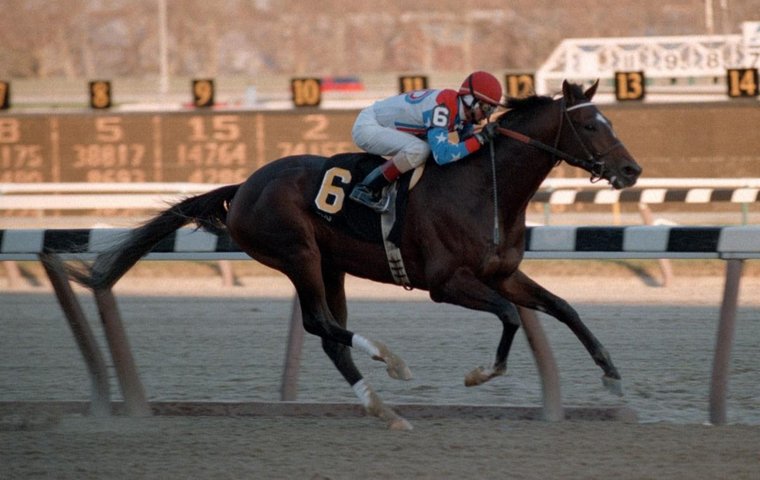
Saturday will mark the final time a trio of Aqueduct Racetrack’s most storied races are held at the Big A.
The Cigar Mile, Demoiselle, and Remsen – each currently a G2 event – have provided many iconic moments during their respective histories.
With Aqueduct scheduled to close following the completion of the new Belmont Park, these races will be transferred to Belmont to open a new chapter for New York racing. The Aqueduct editions of these celebrated contests, meanwhile, will live on in memory and the record books.
Saturday's card features six stakes worth a combined $2.25 million in total purse money topped by the $500,000 Cigar Mile Handicap for three-year-olds and upward in Race 10.
The lucrative program co-features the $250,000 Remsen [Race 9] for two-year-olds going nine furlongs as well as the nine-furlong $250,000 Demoiselle [Race 3] for juvenile fillies.
Also slated for the card is the G3 Elite Power [Race 5] at six furlongs for three-years-old and up which was previously offered as the Runhappy during the Belmont at the Big A spring meet.
The stacked line-up showcases the New York Stallion Stakes Series with a pair of $500,000 stakes at seven furlongs for juveniles that will see eligible New York-sired fillies contest the NYSSS Fifth Avenue [Race 8] at seven furlongs, alongside the NYSSS Great White Way [Race 11].
Cigar Mile
Inaugurated in 1988 as the NYRA Mile Handicap, the race’s first winner was champion Forty Niner, a Claiborne Farm homebred trained by Hall of Famer Woody Stephens.
The NYRA Mile was given G1 status in 1990, and the sixth edition in 1994 was won by the mighty Cigar, who defeated Devil His Due by seven lengths for eventual Hall of Fame connections with Jerry Bailey in the irons for trainer Bill Mott.
Few could have imagined at the time that the NYRA Mile would be the second of a remarkable 16 consecutive victories by Cigar, who until that point had only three wins in 14 starts. Following the legendary Maryland-bred’s retirement, the NYRA Mile was renamed the Cigar Mile prior to the 1997 running.
Cigar’s performance in the NYRA Mile was a breakthrough in his career and also provided the race significant notoriety after the 1993 edition had been cancelled because of purse cuts.
In retrospect, Cigar’s victory in the NYRA Mile was not completely out of the blue. One month earlier, he cruised to an eight-length allowance score going a mile at Aqueduct, but the competition in the NYRA Mile was a big step up with G1 winners Bertrando, Devil His Due, Harlan and Storm Tower in the deep field.
Mike Smith rode Cigar in his Aqueduct allowance win but chose the more proven Devil His Due in the NYRA Mile, which began Bailey’s fruitful partnership with Cigar.
Bettors dismissed Cigar as the 8.9-1 sixth choice in the NYRA Mile behind favored Devil His Due, a five-time G1 winner. Mott, meanwhile, wasn’t in attendance, having traveled to Japan to saddle stable star Paradise Creek for his second-place effort in the Japan Cup.
After a bit of a slow start, Cigar settled nicely in fourth on the backstretch. He kept within striking distance of fast fractions of 22.75 seconds and 45.98 set by reigning champion older horse Bertrando, who was slugging it out on the front end with Swamp King and Storm Tower.
The pace cooked the early leaders and set Cigar up for a big run. He easily passed the tiring pacesetters on the far turn and was two lengths clear of Devil His Due at the top of the stretch en route to the seven-length romp.
“He really smoked them,” Bailey was quoted as saying in the New York Daily News. “I rode him before, but that was on the grass, and he was flat that day. On the dirt, he’s been different.”
A star was born.
Cigar’s NYRA Mile win was the second of 16 consecutive victories. The streak included 10 G1s and the inaugural Dubai World Cup, which was ineligible for G1 status at the time.
He was twice voted Horse of the Year from 1995-96 on his way to the Hall of Fame. He was retired with a record of 19-4-5 from 33 starts and then record earnings of $9,999,815.
Other standouts to win the Cigar Mile include champion Left Bank (2001); back-to-back winner Congaree (2002, 2003); Discreet Cat, who set the stakes record of 1:32.46 in 2006; champion Kodiak Kowboy (2009); Flat Out (2013), who also won multiple editions of the Jockey Club Gold Cup and Suburban Handicap on the NYRA circuit; Tonalist (2015), who also won the Belmont Stakes and two editions of the Jockey Club Gold Cup; and dhampion Maximum Security (2019).
Hall of Fame trainer Todd Pletcher has saddled a record seven winners of the Cigar Mile while Bailey and fellow Hall of Famer John Velazquez share top billing among the jockeys with five wins each in the race.
Demoiselle
The Demoiselle passed through legendary New York racetracks Empire City and Jamaica before becoming an Aqueduct tradition beginning in 1954.
First held at Empire City in 1908, the contest for two-year-old fillies has been run at seven different distances but has been a nine-furlong event since 1975. Empire City was the Demoiselle’s home until 1943, when it was relocated to Jamaica.
The race boasts a number of significant winners, including Hall of Famers Bed o’ Roses (1949), Chris Evert (1973), Genuine Risk (1979), Open Mind (1988) and Ashado (2003). Its recent winners include champions Wonder Gadot (2017), Malathaat (2020) and Nest (2021).
Two generations of the Whitney family thrived in the Demoiselle with Harry Payne Whitney and his son, Cornelius Vanderbilt Whitney, combining for eight Demoiselle wins between 1919 and 1970.
Hall of Famers Pletcher [eight wins] and Angel Cordero, Jr. [five wins] top the Demoiselle’s win leaders among the trainers and jockeys, respectively.
Remsen
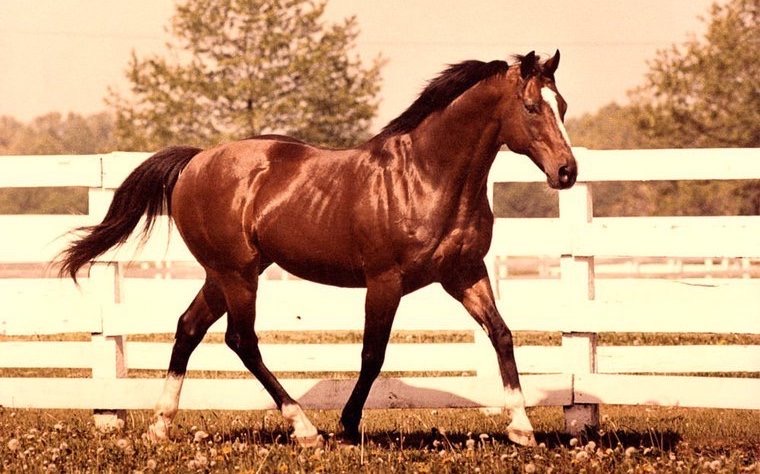 The Remsen has been one of America’s premier juvenile races since its inaugural running at Jamaica in 1904. Two of its first three winners — Dandelion (1904) and Frank Gill (1906) — went on to win the prestigious Travers the following year, stamping the event as one in which future stars are made.
The race was held at Jamaica until it was moved to Aqueduct prior to the 1960 edition.
Named for Revolutionary War colonel Joremus Remsen, who led the American forces in the 1776 Battle of Long Island, the Remsen has been won by Hall of Famers Grey Lag (1920), Johnstown (1938), Carry Back (1960), Northern Dancer (1963) and Damascus (1966).
In the 21st century, its winners include standouts Bluegrass Cat (2005), Nobiz Like Shobiz (2006), Court Vision (2007), Honor Code (2013) and Catholic Boy (2017). Remsen winners Mo Donegal (2021) and Dornoch (2023) each went on to win the Belmont Stakes the following year.
Hall of Fame trainer Shug McGaughey has a record four wins in the Remsen. Hall of Fame jockeys Eddie Maple and John Velazquez share the lead among the riders with four Remsen wins each.
As the calendar approaches 2026, numerous other historic races will soon have their final Aqueduct chapter, including the Jerome (inaugurated in 1866) in January, which is one of America’s oldest races and has been won by 13 Hall of Famers; the Carter Handicap (1895) in April, which has been won by 11 Hall of Famers; and the Wood Memorial (1925) in April, a key Kentucky Derby prep won by 14 Hall of Famers, including Triple Crown winners Gallant Fox (1930), Count Fleet (1943), Assault (1946) and Seattle Slew (1977).
• Brien Bouyea is the Hall of Fame and Communications Director at the National Museum of Racing and Hall of Fame in Saratoga Springs, New York. He is also the author of Bare Knuckles and Saratoga Racing: The Remarkable Life of John Morrissey, co-author of The Travers: 150 Years of Saratoga’s Greatest Race, and editor-in-chief of The Racetracks of America: From the Pre-Civil War Days to the 21st Century
• Visit the NYRA Aqueduct website
‘The little black colt who humbled the best of his generation’ – Jay Hovdey on Snow Chief
Japan Cup hero Calandagan on top of the world as he claims #1 spot on global rankings
View the latest TRC Global Rankings for horses / jockeys / trainers / sires